How to Maintain
Visual Line of Sight (VLOS)
What is Visual Line of Sight?
Fieldwork Foundations
VLOS refers to your ability—using only unaided vision—to see your drone clearly at all times during the flight operation.
This isn’t optional. It’s a requirement under Part 107.
The Two Core Rules of VLOS
1. Continuous Visual Contact
You must keep your drone in sight at all times.
That means tracking its position, orientation, and movement—without any gaps.
This allows you to:
- Avoid midair conflicts
- Respond immediately to environmental shifts
- Stay in full control during every maneuver
2. Clear and Unobstructed View
Your line of sight can’t be blocked by trees, terrain, buildings, or structures.
Always position yourself where you have an open, uninterrupted view of your aircraft—especially during critical segments like takeoff, transitions, and landing.
Working with a Visual Observer (VO)
The remote pilot may utilize a visual observer to assist in maintaining VLOS.
The observer must maintain direct communication with the remote pilot and share the responsibility for maintaining visual line of sight.
In more complex missions,challenging terrain, or simply for extra support, you’re allowed to team up. A Visual Observer (VO) can help extend your awareness, but they must:
- Be in constant communication with the Remote PIC
- Maintain unaided visual contact with the drone
- Be briefed on the mission and understand their role clearly
⚠️ Note: The VO can assist—but not replace—your responsibility. The Remote PIC is still accountable for safety and VLOS compliance at all times.
Maintaining VLOS During Control Transfers
If you transfer control between pilots (such as when handing off across long distances), both parties must maintain VLOS and control of the aircraft throughout the entire process.
There should be zero moments where the drone is flying without someone seeing it.
Make it smooth. Make it planned. Never lose visual contact.
What You Can (and Can’t) Use to Maintain VLOS
Maintaining vs Enhancing Situational Awareness
There’s an important distinction between maintaining situational awareness and enhancing it.
Maintaining situational awareness means keeping your baseline understanding of what’s happening around your drone at all times—its location, orientation, altitude, surrounding obstacles, weather shifts, and airspace activity. It’s your constant scan, your mental map, and your live read of the entire environment during the flight.
Enhancing situational awareness, on the other hand, means using tools or tactics that give you better insight—but only as a supplement to your baseline awareness. For example, briefly checking a live camera feed to spot an obstacle or glancing through binoculars to confirm a nearby hazard can enhance your understanding—but they’re not substitutes for direct visual contact or core pilot awareness.
Bottom line:
- Maintaining is your foundation. Enhancing is your bonus.
- Use tools wisely, but never lose the live, mental picture of your aircraft and airspace.
Let’s take a closer look:
Binoculars and FPV Cameras
Drone pilots cannot rely on binoculars or FPV cameras to maintain Visual Line of Sight (VLOS). These tools are not approved for primary visual contact with the aircraft.
❌ Not Allowed for Maintaining VLOS
FPV Cameras (First Person View)
Using a First Person View (FPV) camera—through goggles or a remote screen—is not permitted for solo commercial operations under Part 107.
- Flying by FPV goggles or remote monitors does not count as maintaining visual line of sight. You need to see the drone and maintain VLOS with your eyes—not just a screen.
Binoculars or Zoom Optics
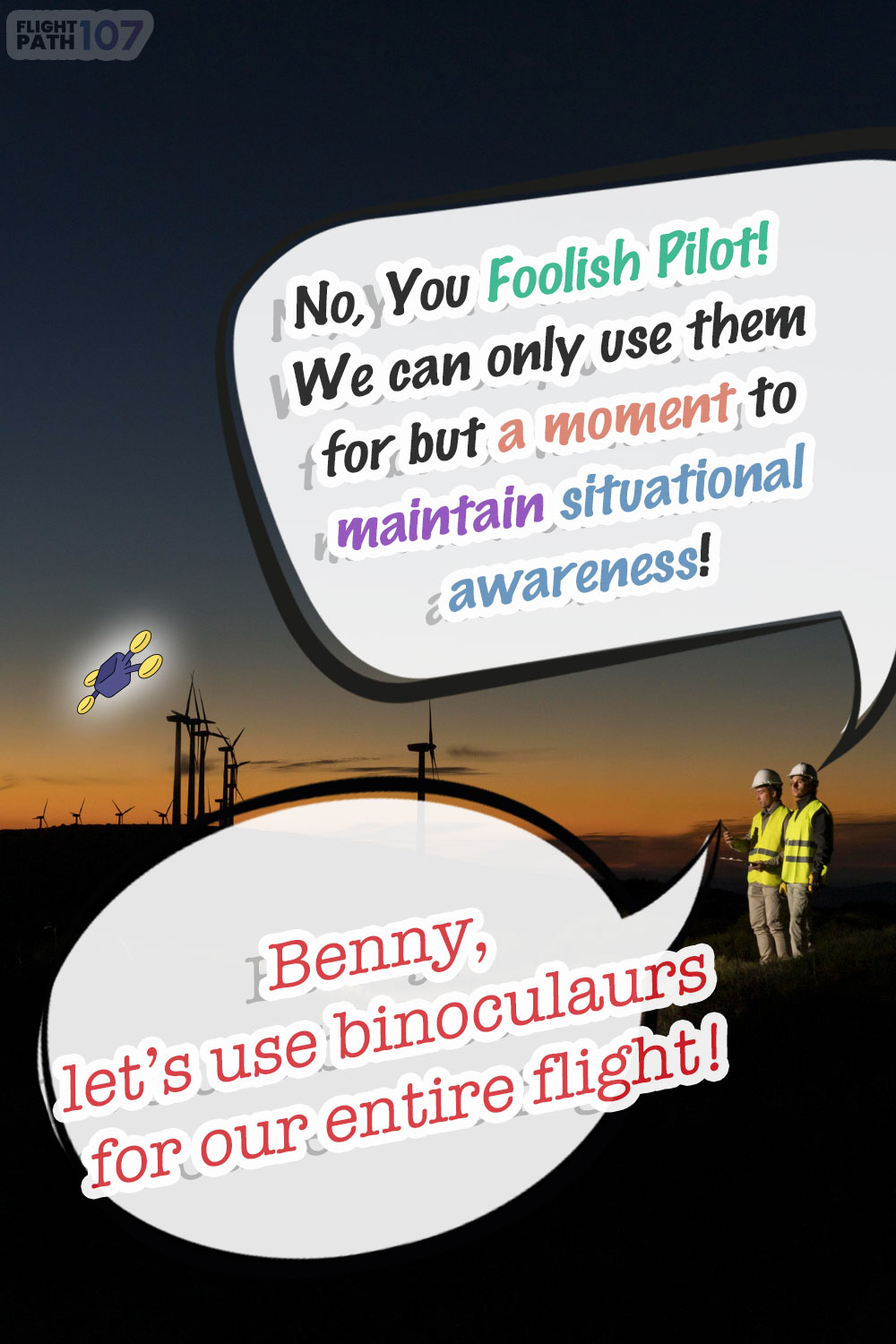
Binoculars are not allowed for maintaining VLOS because they can distort depth perception and create a false sense of distance, making it harder to accurately judge the drone’s position, movement, and surrounding airspace.
- Binoculars can distort your depth perception and distance awareness, therefore they aren’t safe for maintaining VLOS.
- You can momentarily use them to scope out obstacles—but not as your main view of the aircraft.
✅ Allowed for VLOS
Corrective Lenses (Glasses or Contacts)
These are fine. FAA rules allow pilots and VOs to use personal corrective eyewear during operations.
 In the Field Example: Temporary VLOS Loss During a Fire Scene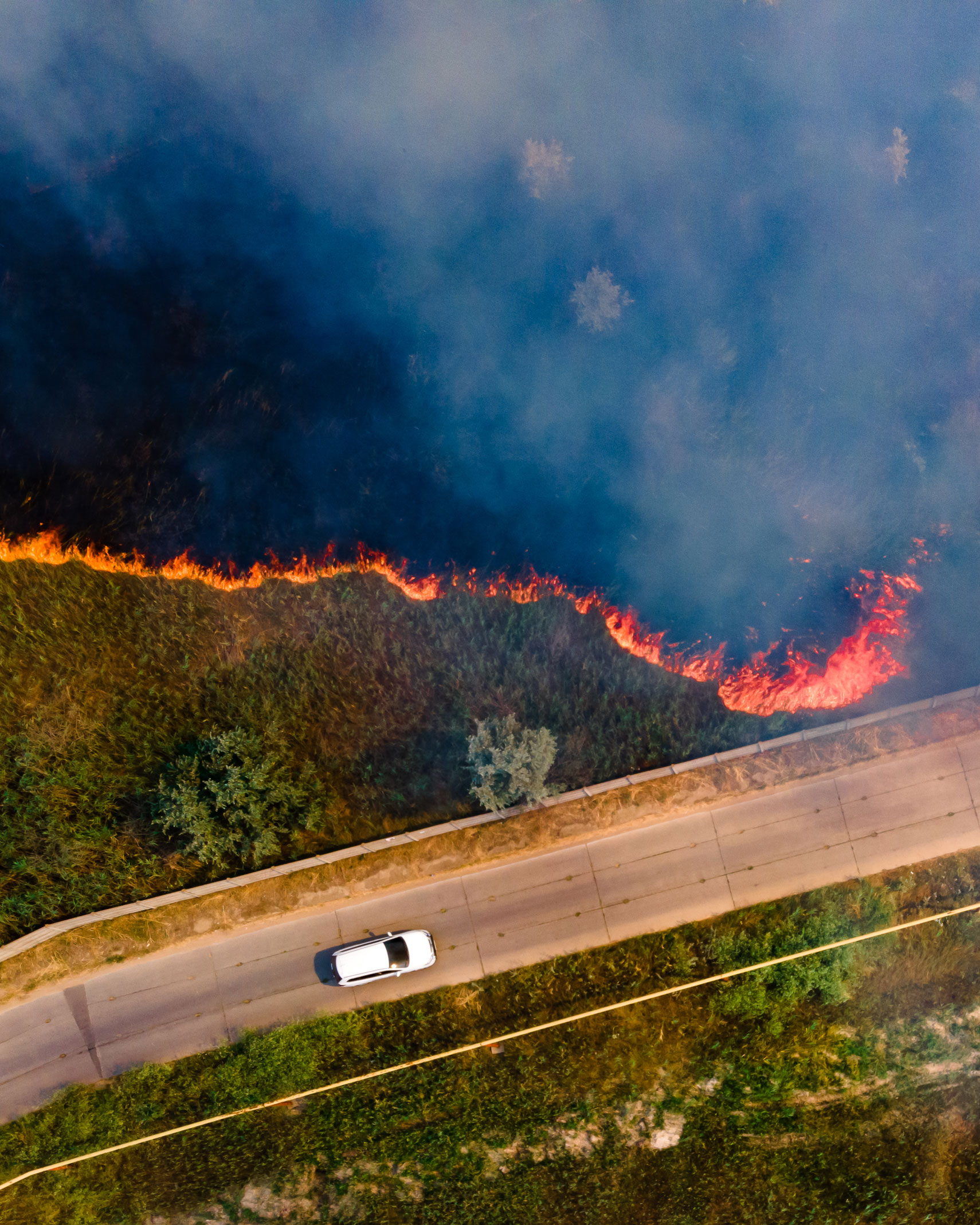
 Using binoculars continuously: not compliant