Special Use Airspace: Introduction
Special Use Airspace is set aside for unusual, sensitive, hazardous, or military-related operations that could affect normal aircraft traffic, including drone flights.
While some Special Use Airspaces can be flown through legally, others require ATC permission, are only active during certain times or are completely prohibited.
In this lesson, we’ll break down the following 6 Special Use Airspace zones you might encounter.
- Alert Areas
- Warning Areas
- Military Operations Areas
- Restricted Areas
- Prohibited Areas
1. Alert Areas
Definition:
Alert areas are established to inform pilots of areas that contain a high volume of pilot training operations, or an unusual type of aeronautical activity (such as parachute jumping or aerial events), that they might not otherwise expect to encounter.
Chart Appearance:
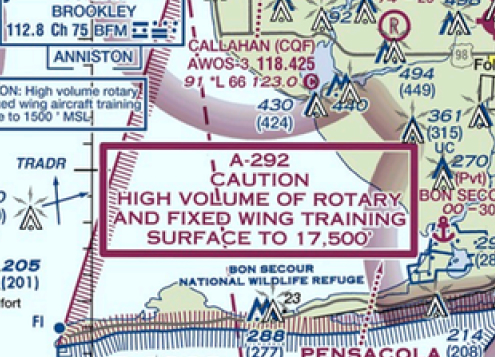
Magenta line with the letter A followed by a number (i.e. A-292).
In the example below we see that Alert A-292 is notifying us of a “high volume of rotary and fixed wing training starting at the surface upwards to 17,500 ft.” This absolutely could interfere with your drone flight given it starts at the surface.
Authorization Required?
Authorization not required.
Pilot Responsibility:
Remain extremely alert for aircraft activity.
2. Warning Areas
Definition:
A Warning Area is a type of Special Use Airspace located over international waters, beginning at least 3 nautical miles off the U.S. coast, where activities may be hazardous to nonparticipating aircraft. The FAA uses Warning Areas to alert civilian pilots that dangerous activity may be occurring nearby.
These areas are commonly used for:
- military exercises
- aerial gunnery
- missile testing
- combat training
- high-speed military operations
Chart Appearance:
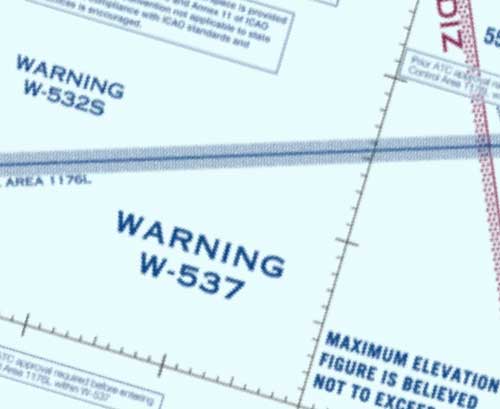
Blue hashed line with the letter W followed by a number.
Authorization Required?
Authorization not required.
Pilot Responsibility:
Remain extremely alert for aircraft activity.
For drone pilots, flying inside an active Warning Area could still be considered careless or reckless if hazardous operations are occurring nearby.
3. Military Operations Areas (MOAs)
Definition:
A Military Training Area should this say Operations instead of Training? is a designated airspace where the military conducts training exercises.
These areas are commonly used for:
- combat maneuvers
- formation flying
- low-altitude operations
- high-speed military aircraft
Chart Appearance:
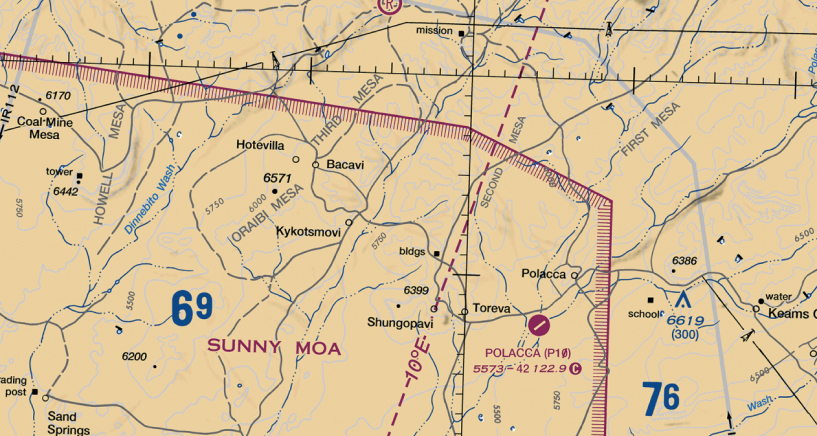
Magenta hashed line with the name of the MOA.
Authorization Required?
Authorization not required.
An MOA itself does not automatically prohibit flight, but when you investigate the MOA details, you may discover things that effectively make flight unsafe, impractical, or legally inaccessible for your specific operation.
For example:
- the MOA may be active during your planned flight time
- military aircraft may be operating at very low altitudes
- the MOA may overlap controlled airspace requiring ATC authorization
- temporary military operations may create additional restrictions
- the activity level may make safe drone operation unrealistic
Pilot Responsibility:
Consider a different route or avoid the MOA completely to help keep drone flights safe and prevent any issues with manned aircraft in that area.
Where to find MOA Details:
MOAs are listed on the border of sectional charts, detailing its name, operating altitude, time of use, radio frequency, and the controlling/contact facility overseeing the MOA.
4. Restricted Areas
Definition:
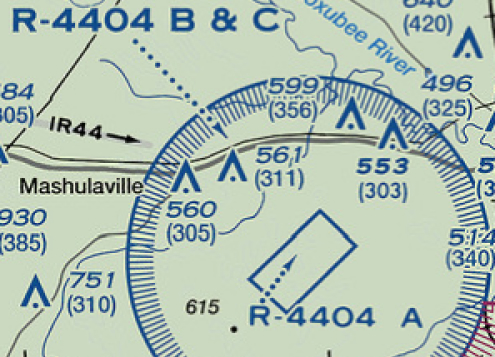
Restricted Areas are zones where aircraft flight is subject to restrictions, but not entirely prohibited when pilots have permission.
Areas containing hazardous operations such as:
- artillery firing
- guided missiles
- aerial gunnery
Chart Appearance:
Blue hashed line with the letter R followed by a number.
Authorization Required?
Authorization required when the area is active.
Pilot Responsibility:
Drone pilots must get permission from the controlling agency to fly through a Restricted Area. If permission is granted, pilots must follow the rules for each area.
5. Prohibited Areas
Definition:
Highly sensitive national security airspace.
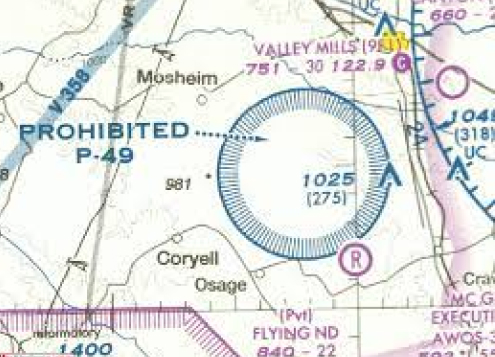
Prohibited Areas are airspace where aircraft cannot operate without the permission of the using agency.
These areas are designated to prevent flight over a specific area on the surface for national security reasons.
They usually protect places like military bases, government spots, or other high-security sites.
Chart Appearance:
Blue circle with the letter P followed by a number.
Authorization Required?
Authorization required
Pilot Responsibility:
Entry into these areas is strictly controlled and requires special permission from the controlling authority.
There are 2 questions about where to find MOA info (side of chart). Delete the second one.