Getting Started
Why This Matters for Flying
Airspace Awareness & Field Skills
Imagine you’re out capturing footage at twilight near a controlled airport boundary. You look up and spot distant lights in the sky—some red, some green, some flashing. In that moment, knowing exactly which direction that aircraft is headed—and whether it’s approaching or moving away—could make all the difference in choosing whether to pause your flight, reposition, or stay the course.
As a remote pilot, you may operate near manned aircraft—especially in controlled airspace, near airports, or during shared missions like search and rescue. Understanding how to interpret aircraft lights helps you spot traffic early and judge where it’s headed. Whether you’re scanning the sky before launch or monitoring during flight, this knowledge can keep you and others safe.
Lesson Focus
Part 107 Knowledge
This lesson trains your eye to recognize the standard lighting setup of manned aircraft. This includes how to read wingtip colors and strobe placement, as well as determine the aircraft’s direction of flight at a glance. You’ll learn how to:
- Visually assess the orientation of an aircraft at night or in low visibility
- Determine whether an aircraft is approaching, crossing, or moving away
- Respond appropriately based on its direction and your position
How to Interpret Aircraft Anti-Collision Lighting and Flight Direction
Step 1: Identify Left vs. Right on an Aircraft
Field Skills
Manned aircraft are equipped with standardized lighting systems that communicate direction and presence. These lights help others (including drone pilots) understand where an aircraft is, what direction it’s traveling, and whether it poses a conflict.
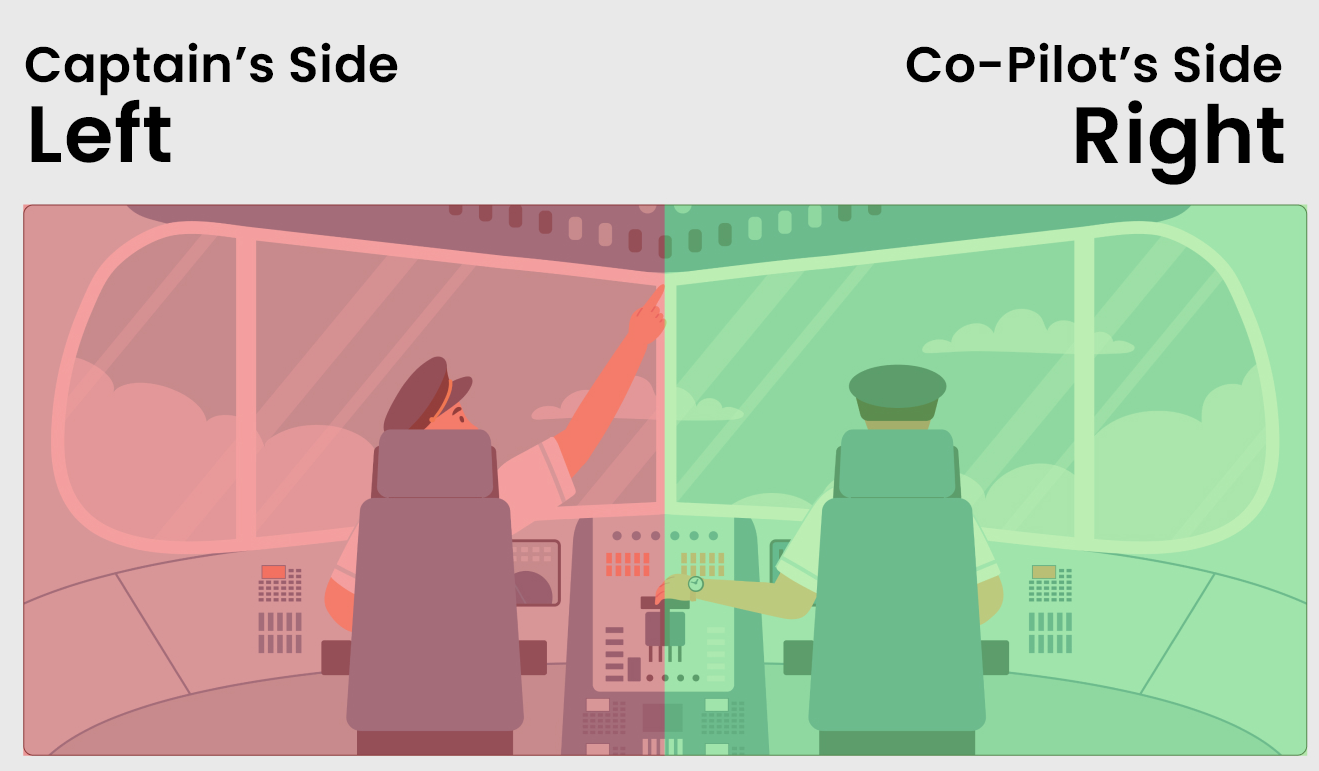
Let’s first clarify the orientation of an aircraft from the pilot’s perspective. Always view light positions as if you’re looking from the aircraft’s cockpit.
Inside the cockpit, the left side of the aircraft where the captain sits is referred to as the port side, while the right side is known as the starboard side.
From the pilot’s perspective:
- Left = Port
- Right = Starboard
This internal orientation helps you decode where the lights are positioned. Every aircraft follows this same layout.
Step 2: Understand the Light Colors and Positions
Field Skills
Match Lights to Aircraft Movement
Scenario 1: Aircraft Crossing Left
Field Skills
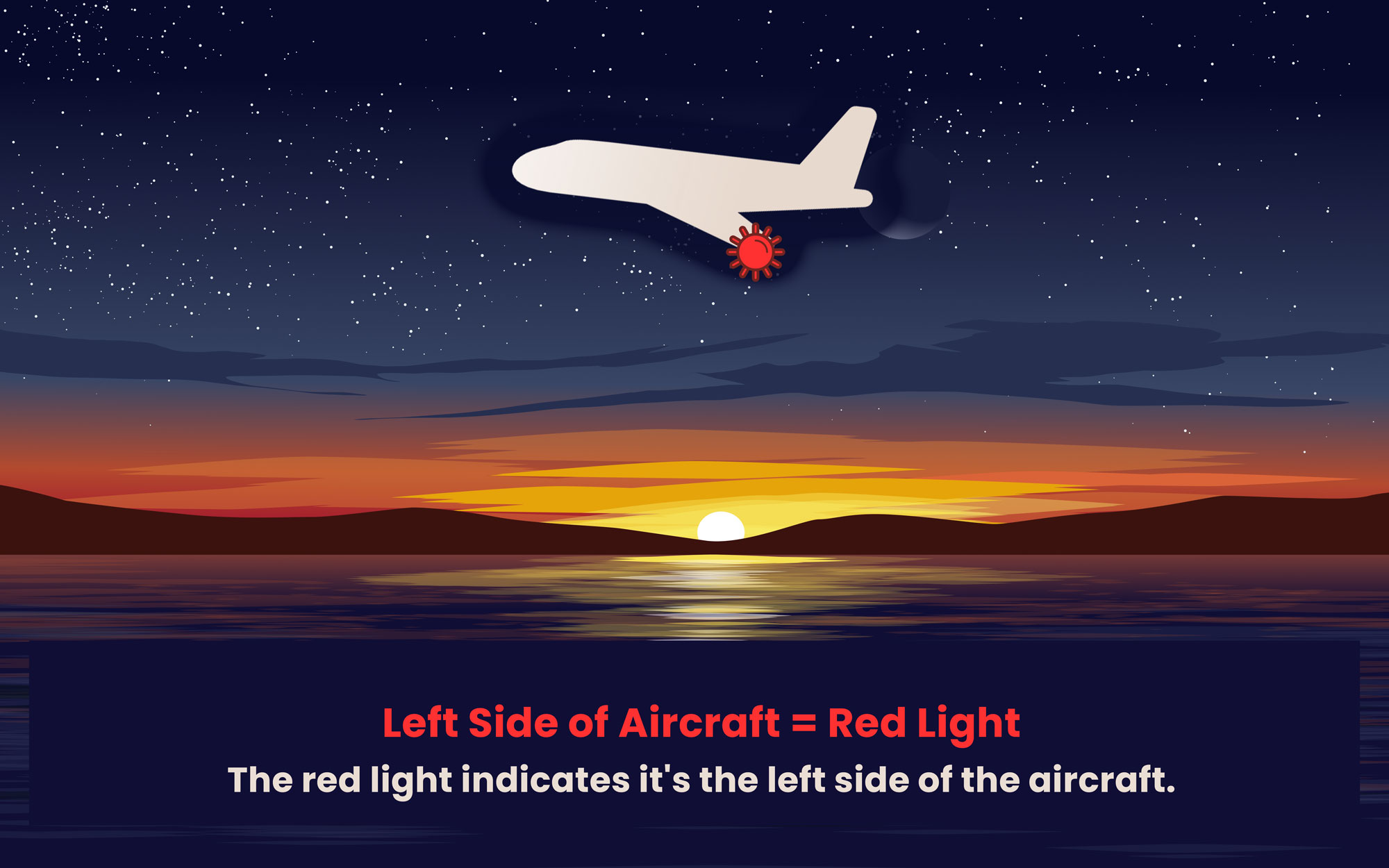
During a night flight you observe a steady red light and a flashing red light. What is the general direction of movement of the aircraft?
- Answer: This combination indicates the aircraft is crossing to your left.
- A steady red light is fixed to the left wing of the aircraft.
- The flashing red light beacon, often found on the bottom of the aircraft, is visible to you because the aircraft is above you.
Scenario 2: Crossing to your Right
Field Skills
During a night flight you observe a steady green light and a flashing red light. What is the general direction of movement of the aircraft?
- Answer: This combination indicates the aircraft is crossing to your right.
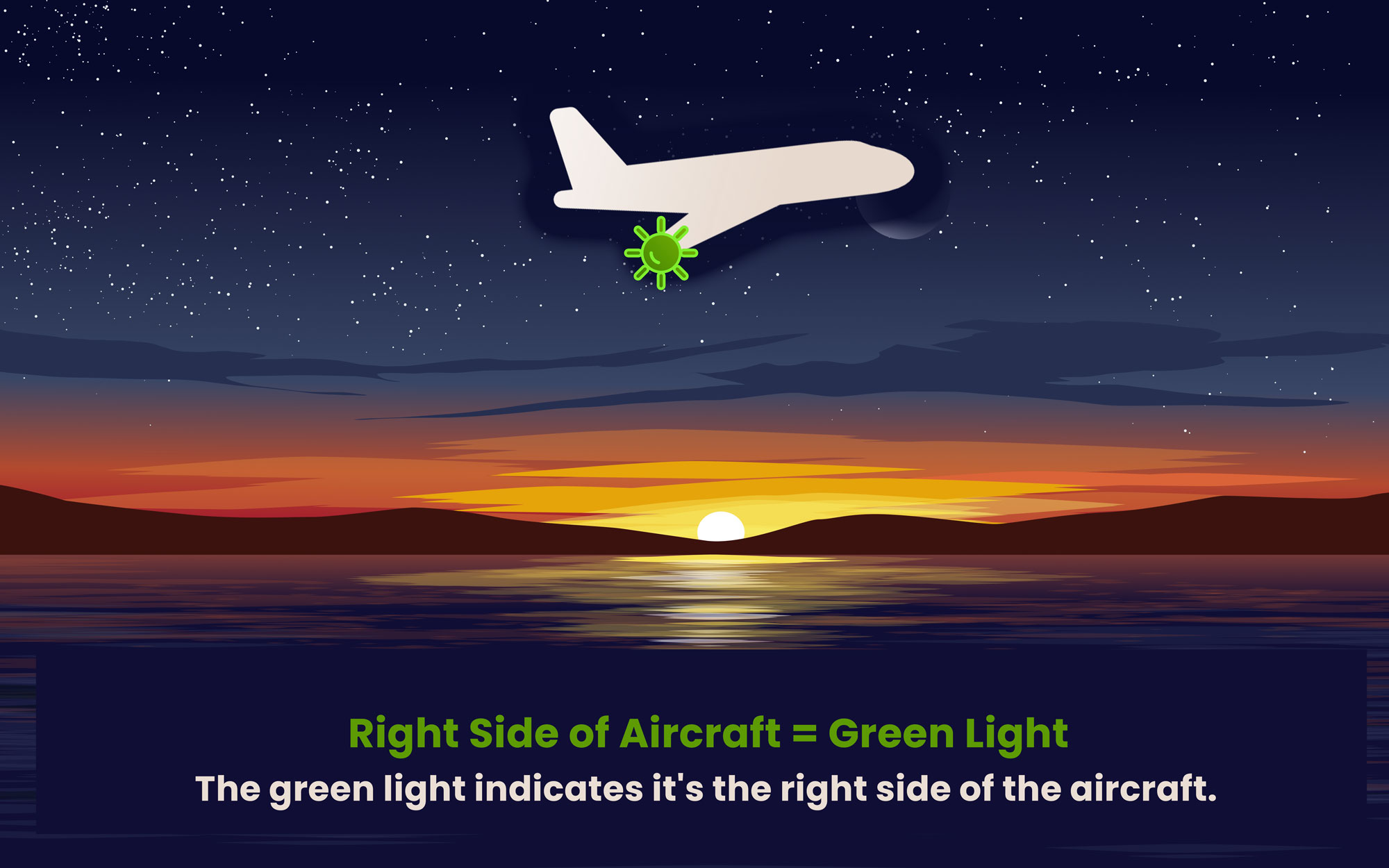
- A steady green light is fixed to the right wing of the aircraft.
- The flashing red light beacon, often found on the bottom of the aircraft, is visible to you because the aircraft is above you.
Scenario 3: Aircraft Approaching You
Field Skills
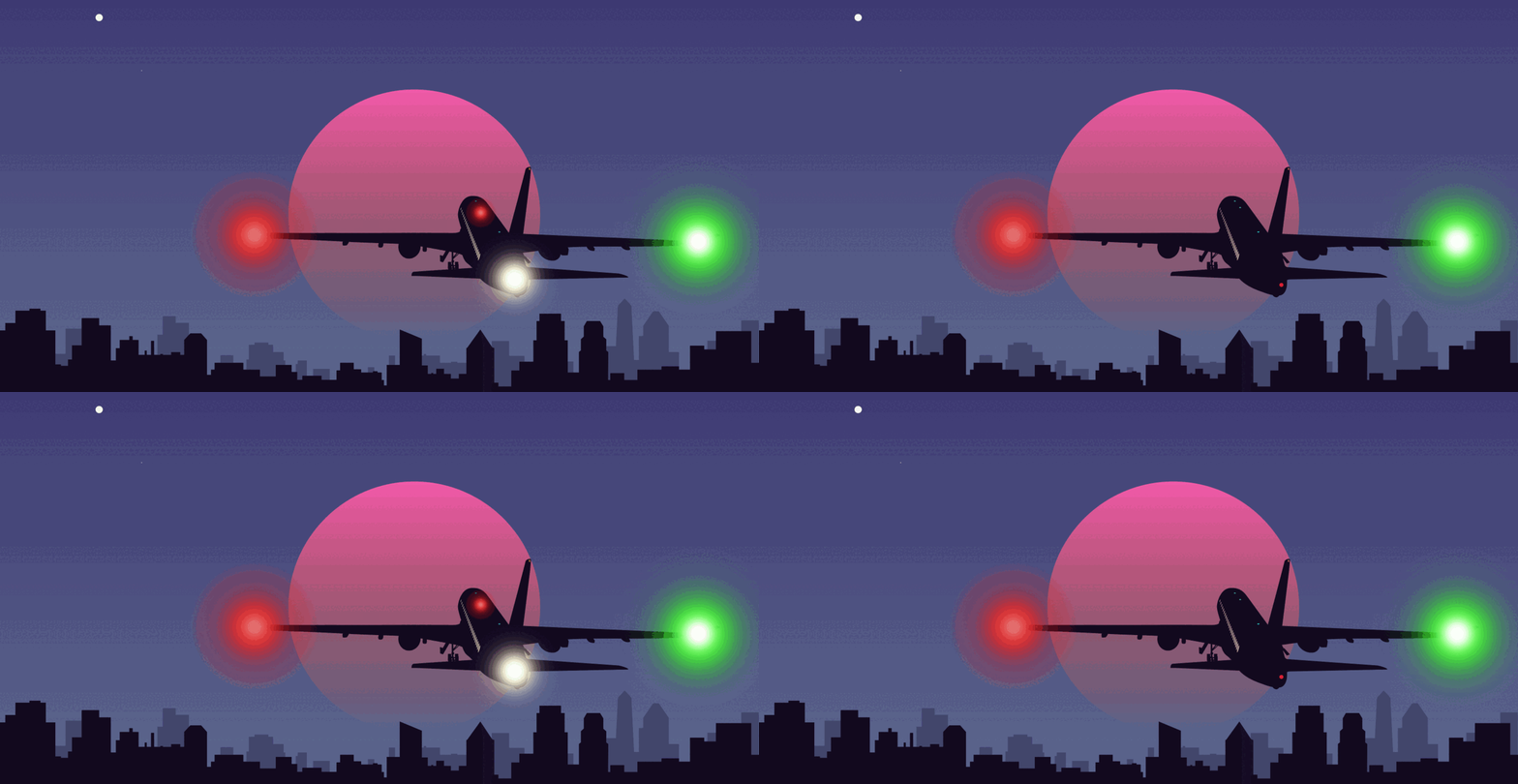
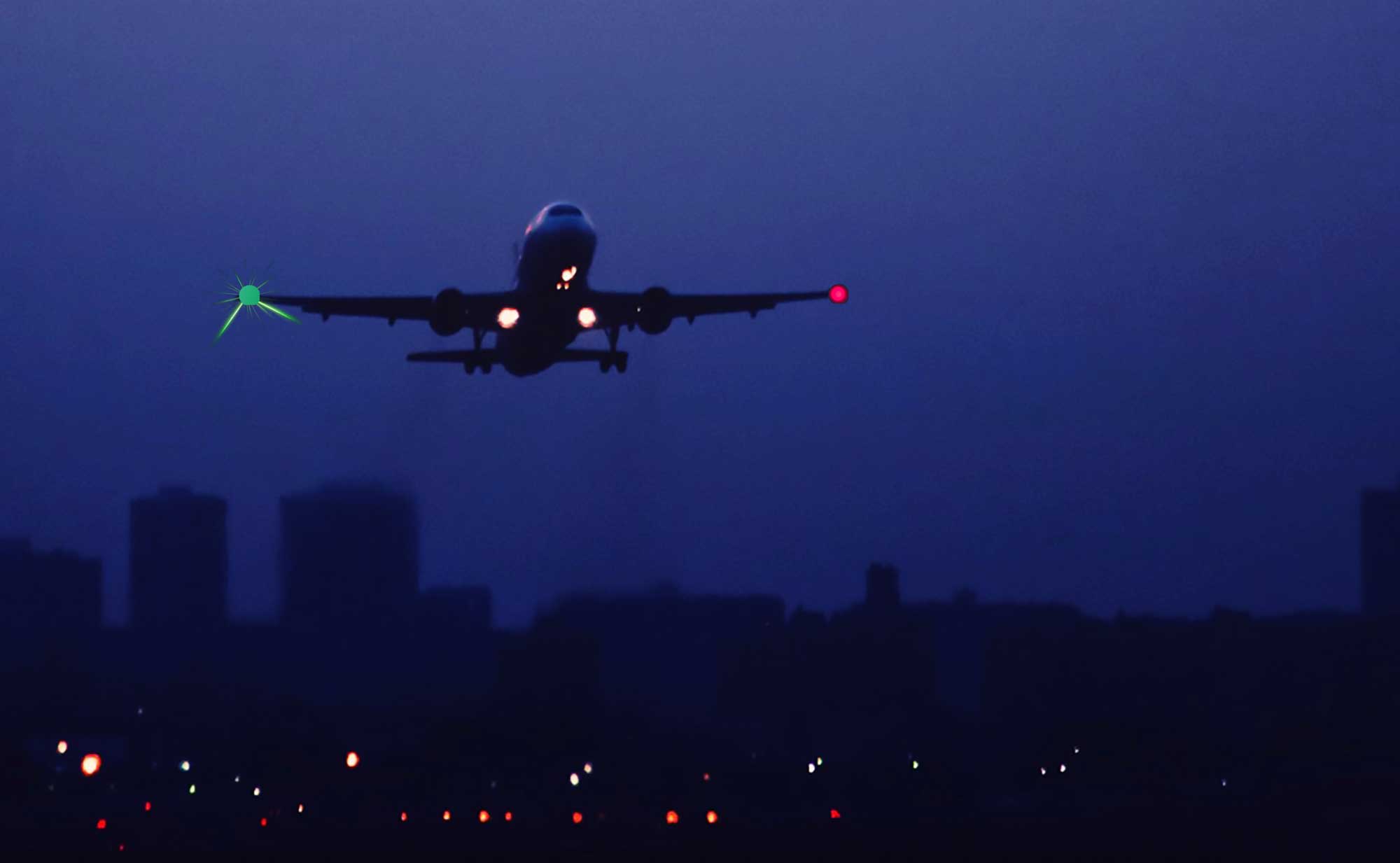
During a night flight you observe a steady red and green lights lights on the aircraft above you. What is the general direction of movement of the aircraft?
- Answer: If you see both solid red and green lights, the aircraft is heading towards you.
Scenario 4: Aircraft Moving Away from You
Field Skills
During a night flight you observe a white strobe light on the tail of an aircraft. What is the general direction of movement of the aircraft?
- Answer: If you observe only the white strobe light on the tail of an aircraft, it means the aircraft is moving away from you. The white strobe light, typically found on the tail, is designed to make the aircraft visible from behind.