Getting Started
Why it Matters for Flying
Fieldwork Foundations
As a drone pilot operating near airports, especially in controlled airspace, understanding how runway numbers work helps you anticipate the direction of manned aircraft. This can guide your flight planning, especially when coordinating with ATC or using LAANC. You’ll be better equipped to visualize flight paths and avoid conflicts.
Lesson Focus
This lesson will help you read runway numbers and understand what they tell you about a runway’s compass heading. You’ll learn how to interpret runway designations in relation to magnetic north and why these numbers are crucial when referencing sectional charts, airspace classes, and NOTAMs.
How Runways are Numbered
Introduction to Runway Numbers
Airspace Awareness
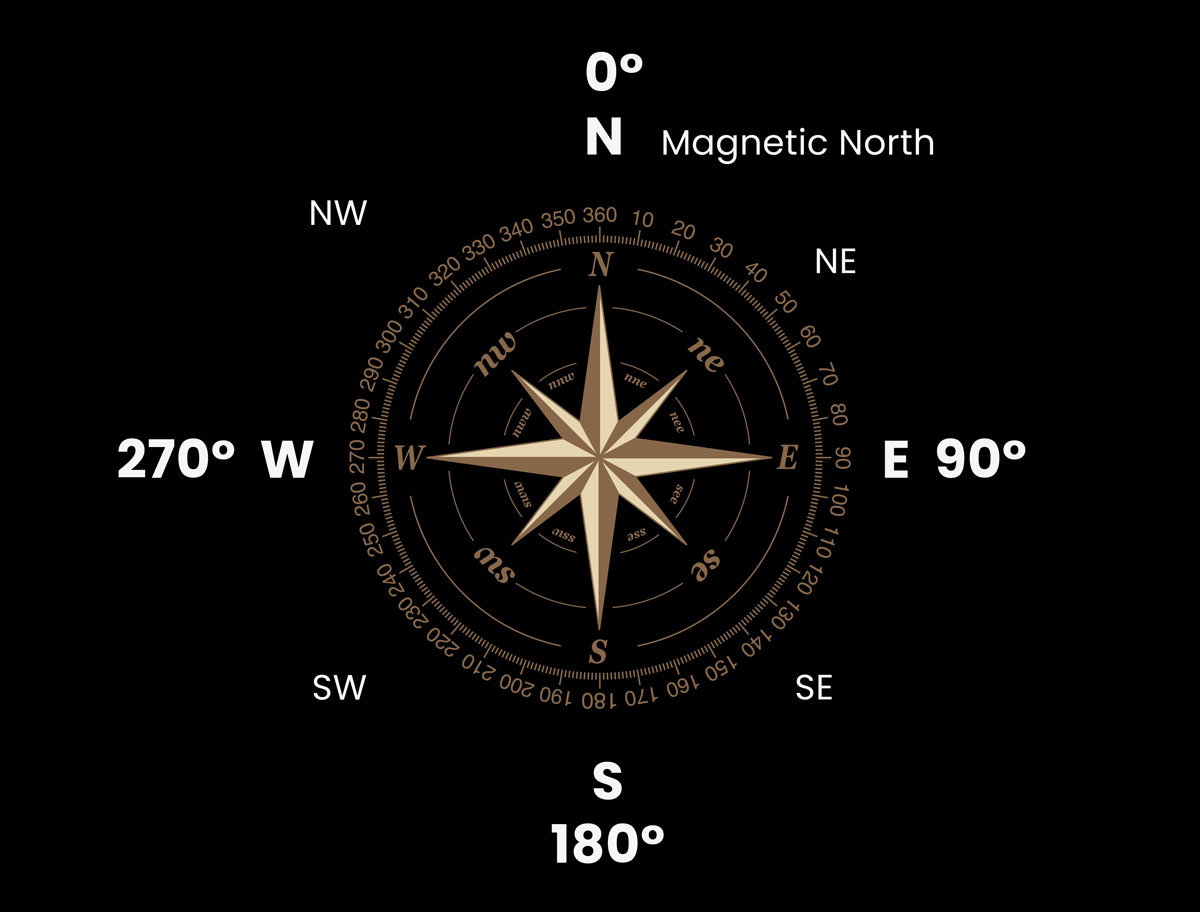
Runway numbers are based on the magnetic heading (not true north) of the runway, rounded to the nearest 10 degrees.
Think of a compass rose from 0° to 360°. If a runway points toward 273°, it’s rounded to 270°, and shortened to two digits: Runway 27.
These numbers help pilots and ATC know in which direction take-off and landing are occurring.
That’s right folks… it’s not like they chose runway 09 because it’s the boss’ favorite number since they were born in September.
For example:
- a runway numbered 09 means it’s aligned with a heading of 90 degrees (east).
- a runway numbered 27 means its aligned with a heading of 260 degrees (west).
How to Read a Runway Number
Field Skills
Runway numbers don’t just label the pavement—they reveal the exact direction aircraft are headed during takeoff and landing. By understanding the magnetic heading behind each runway number, you can quickly determine where manned aircraft are coming from or going to.
To decode a runway number:
- Add a zero to the end of the number.
- That gives you the approximate magnetic heading of the runway.
For example:
- Runway 27 → 270° → Flying Due West
- Runway 09 → 090° → Flying Due East
- Runway 18 → 180° → Flying Due South
- Runway 36 → 360° → Flying Due North
Two Ends of Every Runway
Airspace Awareness
Each runway has two ends, and therefore two numbers—180° apart.
- If one end is Runway 09 (90°/East), the other end will be Runway 27 (270°/West).
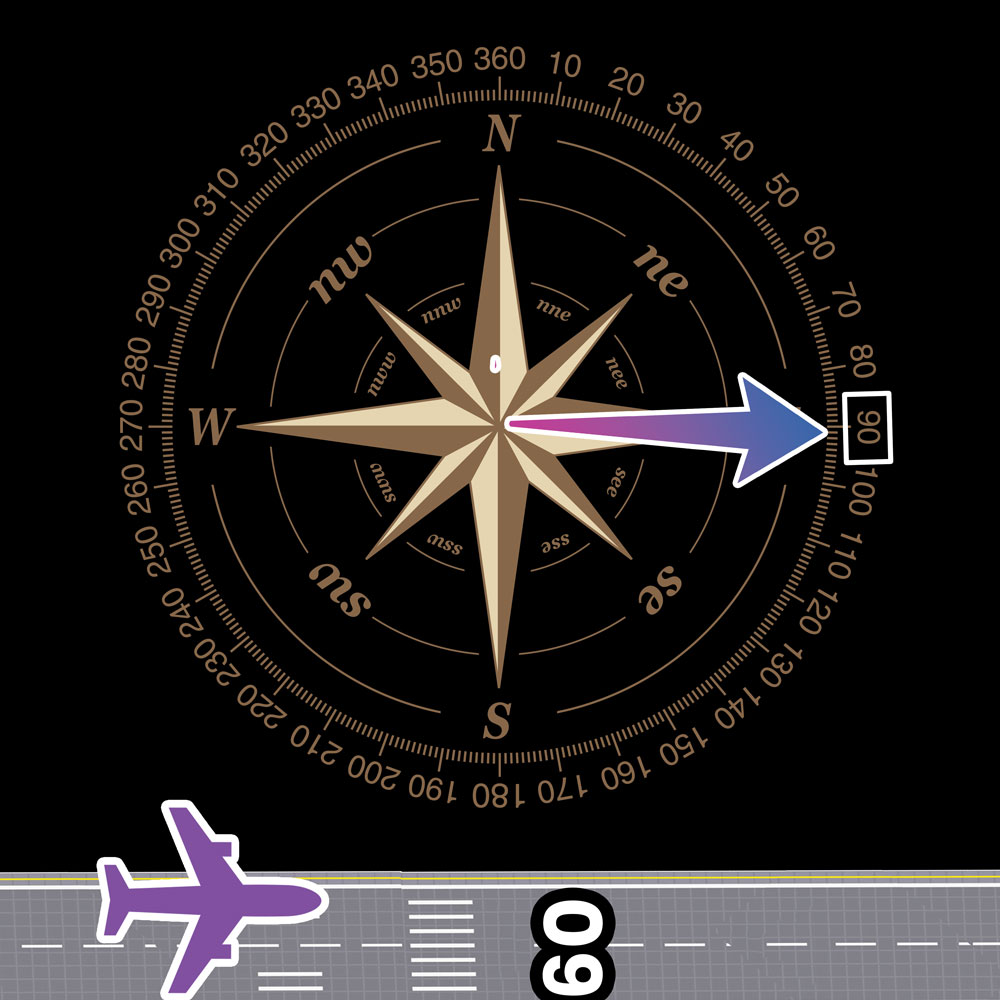
Runway 09 = 90° due East
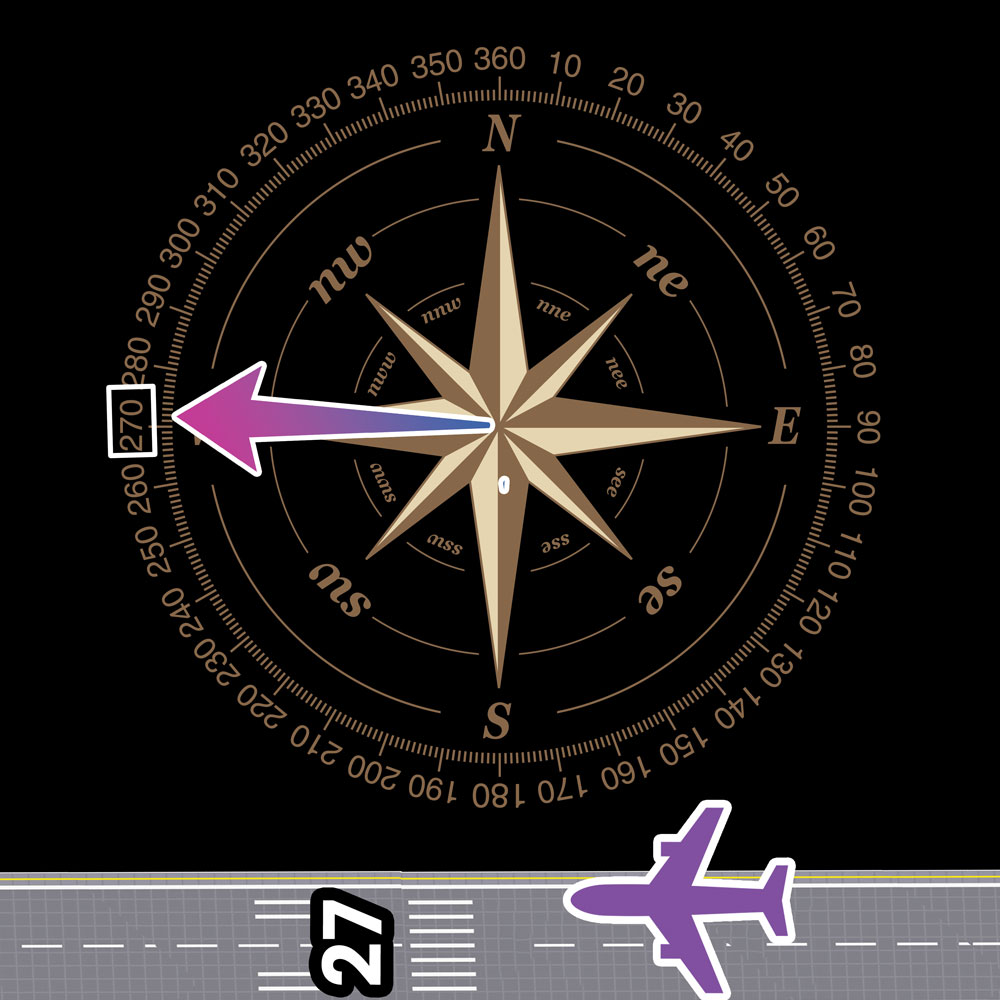
Runway 27 = 270° due West
Runway Numbers & Magnetic North
For the Part 107 exam you just need to know that runway numbers are aligned with magnetic north (not True North).
Since we know that Earth’s Magnetic North shifts over time, runway numbers are reviewed by the FAA every 5 years, and updated if there’s been a change of more than 7°.
Predicting Aircraft Direction
Using Runway Numbers
Manned Aircraft is on Final Approach to Runway 16.
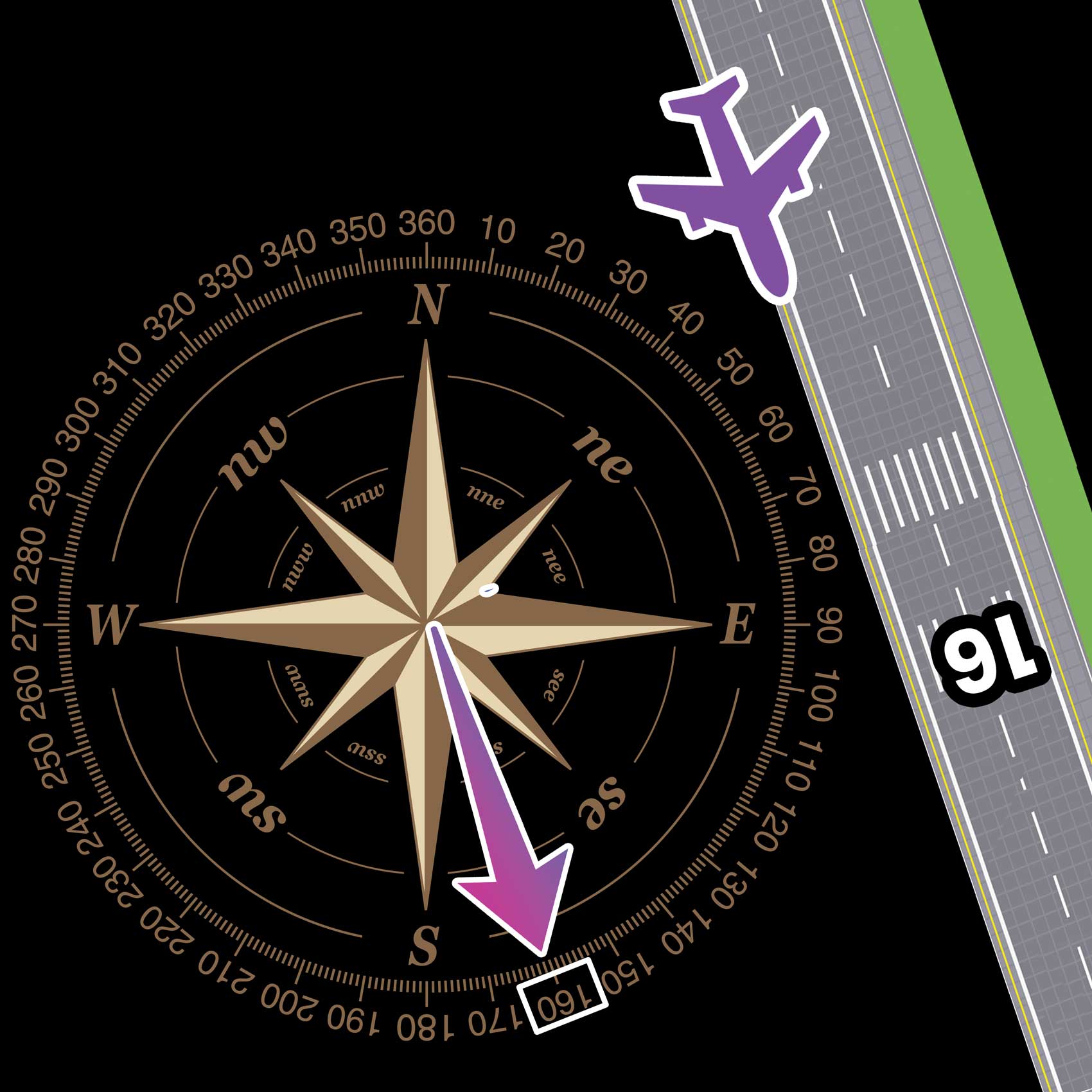
Runway 16 = 160° Southeast
You’re out near the edge of a controlled airspace zone, filming coastal infrastructure as part of a documentation contract. You’ve got your ATC radio tuned in to stay situationally aware, and you catch a call: a manned aircraft is on final approach to Runway 16.
You pause and think: Runway 16 means a heading of 160°—meaning the aircraft is lined up to land toward the southeast. That tells you the plane is coming from the north, flying toward the south-southeast.
Knowing this, you double-check your drone’s position relative to that flight path. Since your drone is operating north of the airport, you decide to descend to a lower altitude and move slightly west to stay clear of the aircraft’s approach route. This is exactly the kind of field judgment that keeps operations safe and legal under Part 107.
Manned Aircraft is on Final Approach to Runway 18.
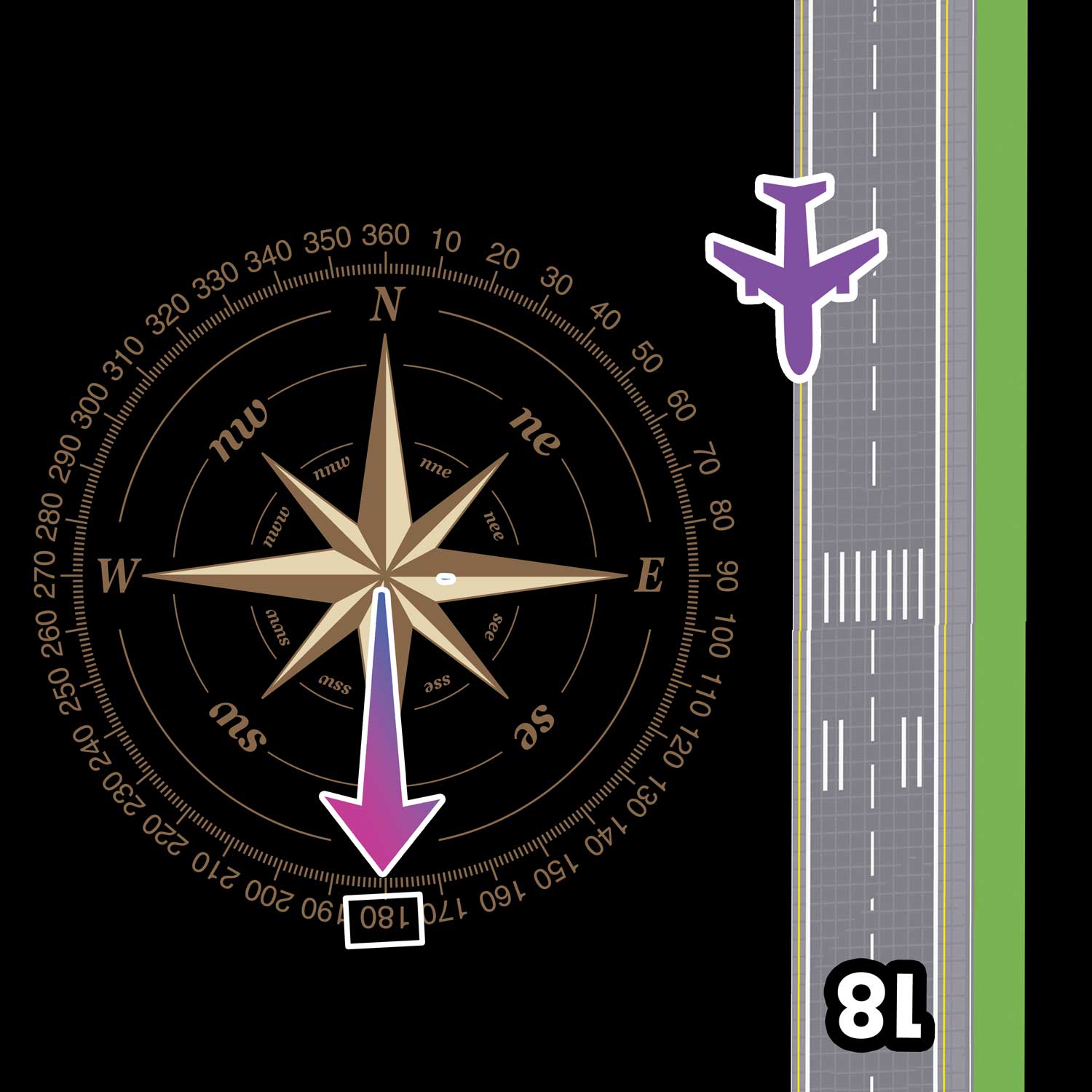
Runway 18 = 180° due South
You’re flying your sUAS near a construction site just outside Class D airspace. You hear over the ATC radio: “Cleared to land, Runway 18.”
Immediately, your mental compass kicks in—Runway 18 means a heading of 180°, which is due south. You now know the aircraft is coming from the north, lining up to land straight down the compass line.
Since you’re positioned east of the airport, you know you’re not in its path—but you still stay alert and keep clear of any possible crosswind vectors.
Additional Examples

Runway 13 = 130° due Southeast
Runway 13 = Heading 130° → Aircraft is landing southeast
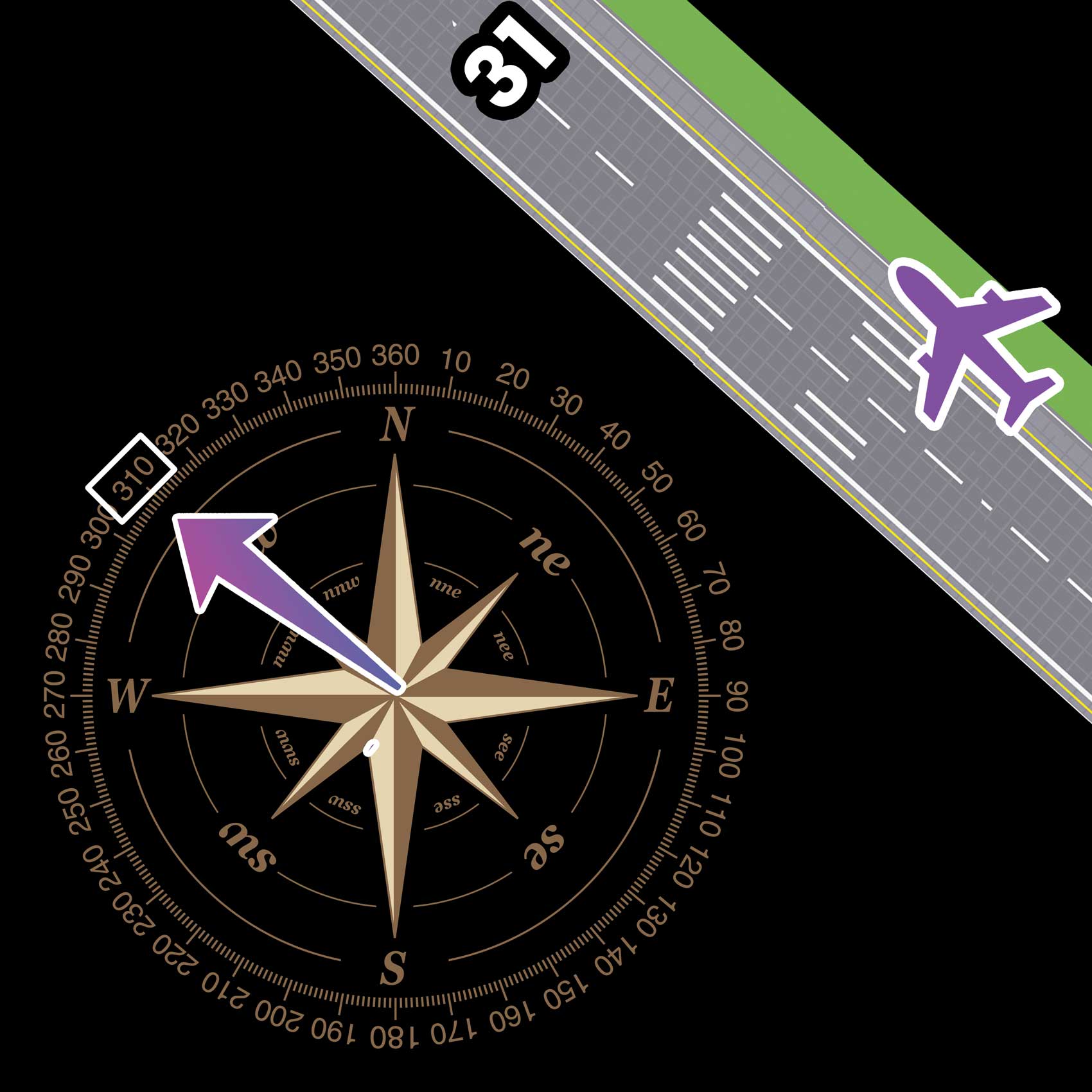
Runway 31 = 310° Northweset
Runway 31 = Heading 310° → Aircraft is landing northwest
Flash Cards
Runway 17
Runway Orientation in Degrees?Answer:
170° Southeast
Runway 12
Runway Orientation in Degrees?Answer:
120° Southeast
Runway 36
Runway Orientation in Degrees?Answer:
360° due North
Runway 08
Runway Orientation in Degrees?Answer:
80° Northeast
Runway 26
Runway Orientation in Degrees?Answer:
260° Southwest