Getting Started
Paragraph Title
Subtext
Lorem Ipsum
Towered vs. Untowered Airports
Towered Airports
High Level of Oversight
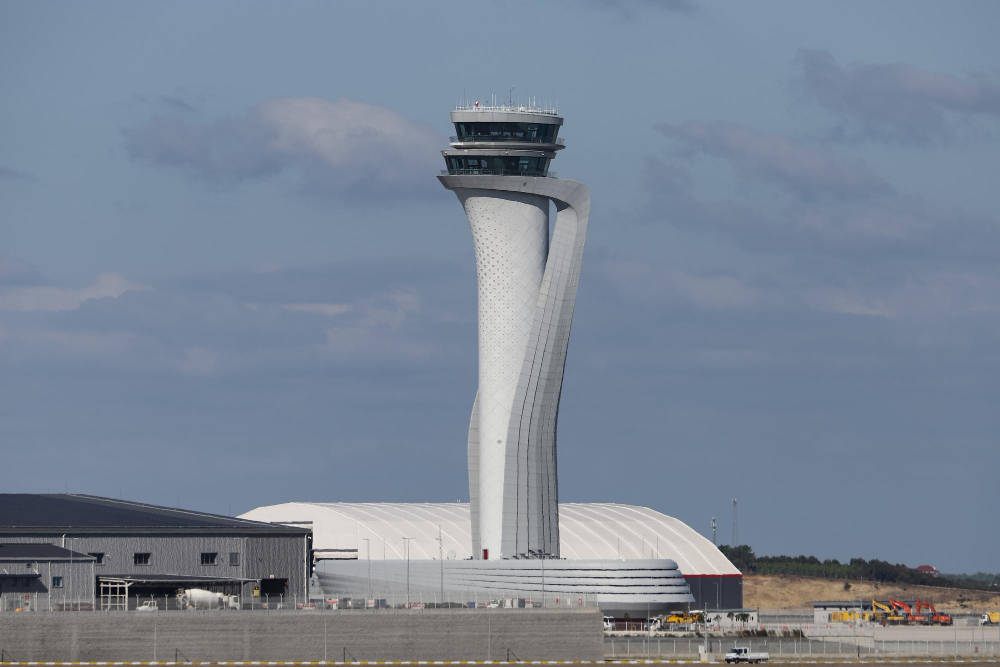
Towered and untowered airports differ primarily in how air traffic is managed, with towered airports offering a higher level of oversight.
At towered airports, an Air Traffic Control (ATC) tower actively manages aircraft movements both on the ground and in the surrounding airspace. These airports are typically associated with controlled airspace, such as Class B, C, or D.
Untowered Airports
Self-Managed by Pilots
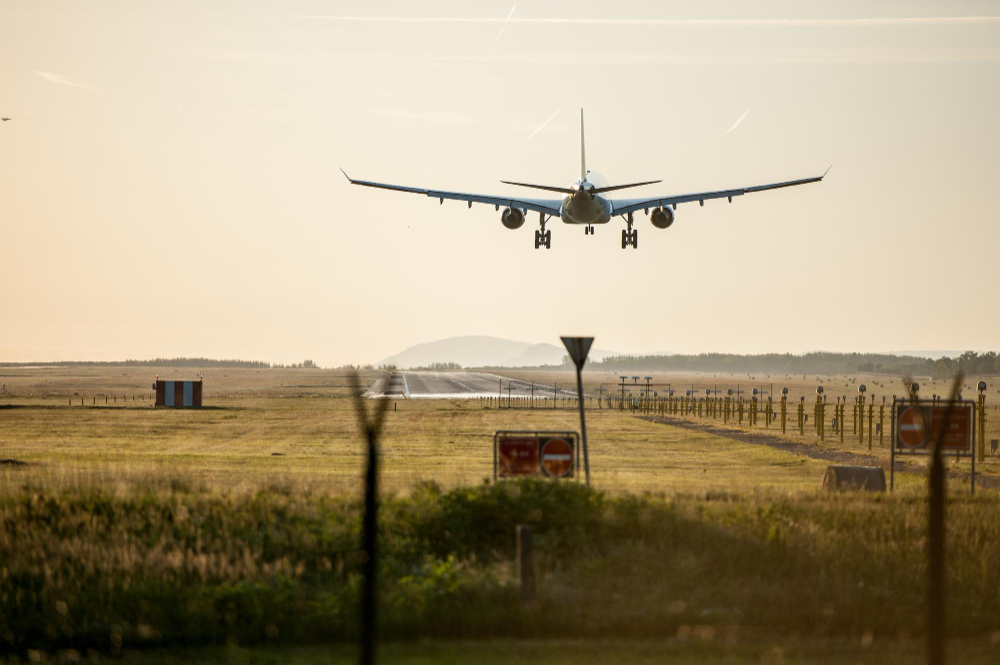
Untowered airports rely on pilot coordination to maintain safe operations, as there is no Air Traffic Control (ATC) tower to manage aircraft movements.
Pilots communicate directly with one another using specific radio frequencies, such as CTAF (common traffic advisory frequency) or MULTICOM (22.9MHz) to announce their intentions and maintain safe separation.
Air Traffic Control (ATC):
managing the flow of air traffic in controlled airspace
Air Traffic Control (ATC)
Pilot Support in Towered Environments
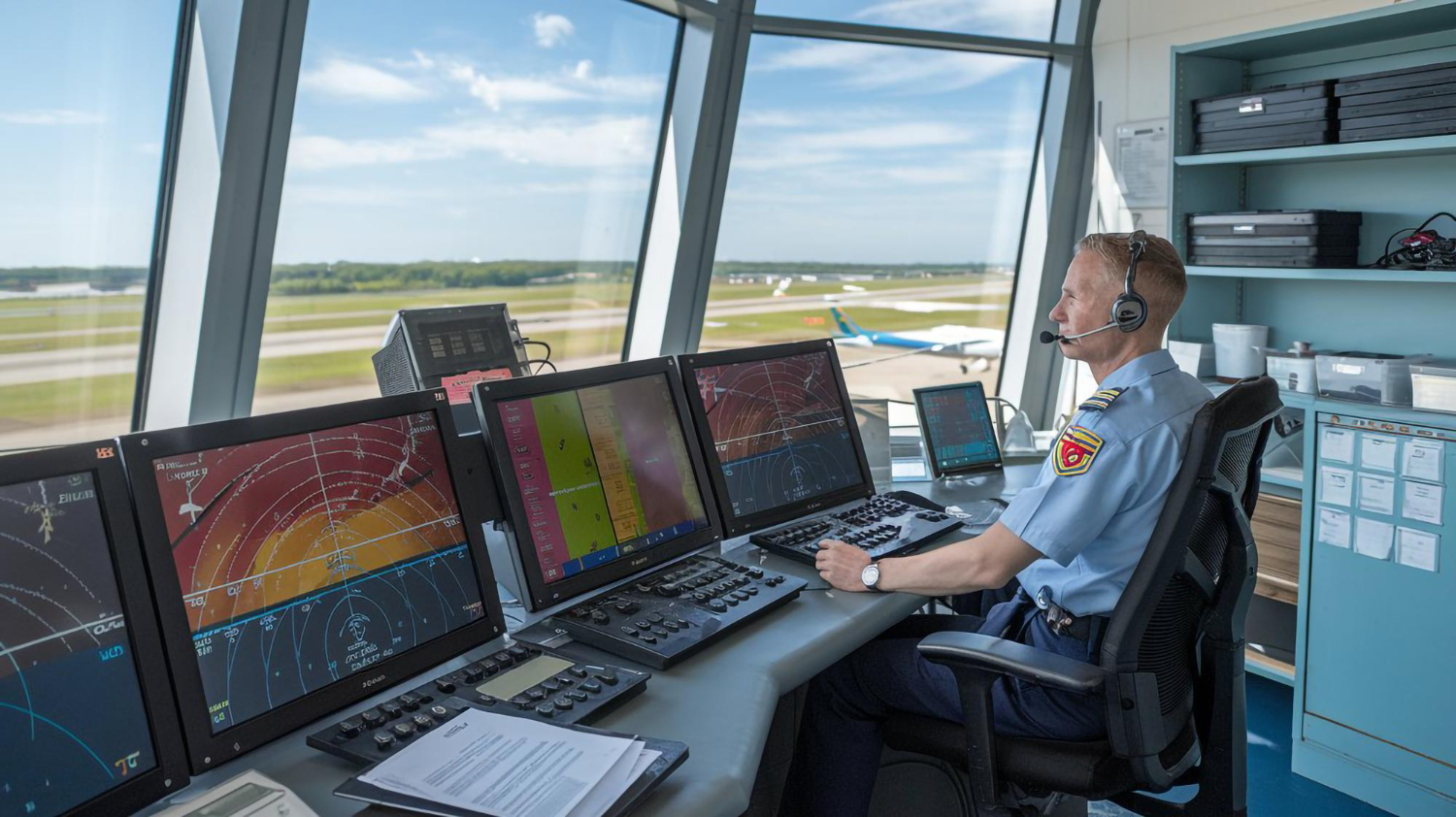
ATC is responsible for managing the flow of air traffic in controlled airspace.
Controllers issue clearances, provide traffic separation, and offer critical instructions to pilots.
At towered airports, pilots must maintain communication with ATC for takeoffs, landings, and taxi operations.
Flight Service Station (FSS):
pre-flight planning support
Flight Service Station (FSS)
Pilot Support in Untowered Environments
To communicate with a Flight Service Station (FSS), pilots use designated radio frequencies that are standardized across the United States. The most commonly used frequency is 122.2 MHz, making it a go-to option for contacting FSS.
Flight Service Stations provide vital support to pilots, particularly in untowered environments. Unlike ATC towers which are located at designated airports, FSS locations are located throughout the country, often in regional offices.
When to use FSS 122.2 MHz:
- Pre-flight assistance: For weather briefings, filing flight plans, or receiving other critical information.
- In-flight assistance: For updates on changing weather conditions, Notices to Air Missions (NOTAMs), or relaying position reports if ATC communication isn’t available.
FSS Weather Briefing Types
3 Types Briefings
FSS offers three types of weather briefings to help pilots plan safe flights:
- Standard Briefing: A full, detailed weather overview for pre-flight planning.
- Abbreviated Briefing: Provides a condensed version of the standard briefing, focusing on essential information for safe flight planning.
- Outlook Briefing: Provides forecasts beyond six hours, giving pilots a longer-term perspective on weather conditions.
**Note** On the Part 107 Exam, if asked to choose between “supplemental briefing” and “abbreviated briefing,” pick “abbreviated briefing.” The term “supplemental briefing” doesn’t exist and is intentionally misleading!
FSS Briefings vs. ATC Communication at Towered Airports
FSS vs. ATC in the Field
You can still get an FSS briefing for a flight at a towered airport, especially for pre-flight planning.
However, once you’re flying within or near the towered airport airspace, you’ll rely on ATC for real-time instructions like takeoff clearances, taxi routes, and air traffic control.
FSS helps you plan your flight, and ATC handles things once you’re in the air and at the airport.