Airspace Class Regulation Distinctions
Introduction
The following are the 4 main areas you’ll consider when determining if it is legal, or how to be legal, when flying in certain airspace classes.
- Control Tower Presence? Is the airspace controlled or uncontrolled with a tower present?
- ATC Authorization Requirement? Do you need ATC clearance to enter the airspace class?
- Specialized Equipment Required? Are you required to have ADS-B, transponders, or other tech?
- Airspace Surface and Ceiling Regulations? How high and wide does the airspace extend before it transitions into another class?
Depending on the class, such as at busy, high-traffic Class B and C airports, a lot of authorization is required. On the other hand, class G, you’ll find has the least amount.
Lesson Breakdown
- In part 1 of this lesson, we’ll break down what each of these means.
- In Part 2, we’ll go class-by-class with what’s required for each.
Detailed Breakout

1. Control Tower Presence
An airport control tower is a tall, centrally located structure, often featuring a glass-enclosed top level (visual control room), where air traffic controllers monitor and direct the safe, orderly movement of aircraft and vehicles on the ground (taxiways/runways) and in the immediate surrounding airspace
There are two types of airspaces, towered and untowered:
- Controlled Airspace (Towered)
- Controlled airspace is regulated by ATC, meaning you must get airspace authorization before entering, including as a drone pilot.
- Uncontrolled Airspace (Untowered)
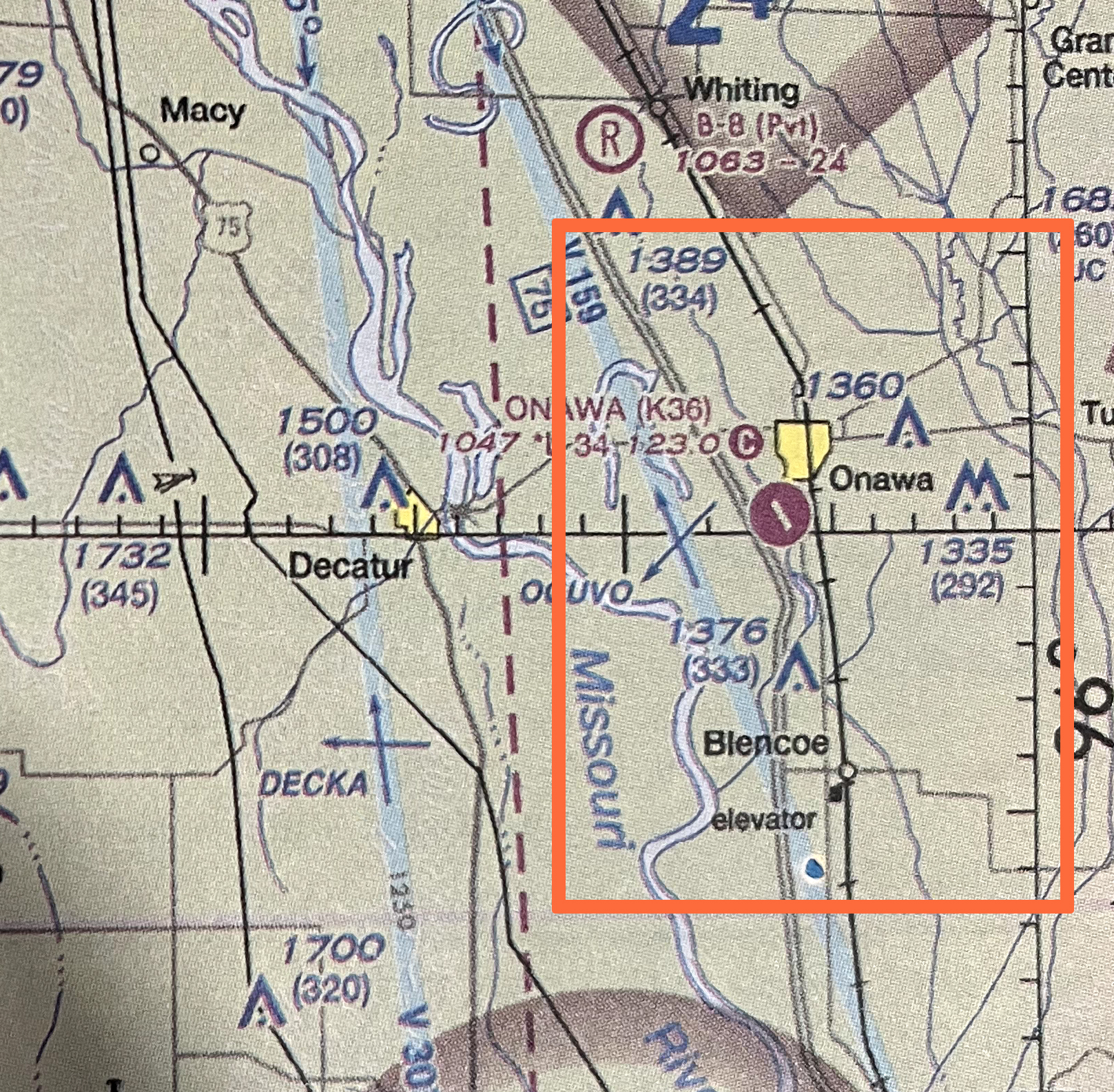
- Uncontrolled airspace does not have ATC supervision, which means you don’t need prior permission to fly there. This is typically the case for more rural or less densely populated areas. In these areas, drones can be flown without needing to request clearance from ATC.

2. ATC Authorization Required
In certain airspace classes, especially around busy airports or in controlled areas, you’ll be required to have a permission from Air Traffic Control (ATC) to fly in the airspace.
ATC gives clearance to enter, instructions during your flight, and facilitates safe separation from other aircraft.
In less regulated, uncontrolled airspace, like Class G, you won’t need ATC permission because there’s no ATC oversight.
3. Specialized Equipment Required
In some airspaces, manned aircraft are required to have the following specific equipment:
- Mode C transponder – sends the aircraft’s ID to Air Traffic Control
- ADS-B Out – broadcasts the aircraft’s altitude and position
- Altimeter – measures altitude
These systems are primarily for larger, manned aircraft or certain situations, and most recreational or commercial drones flying under typical conditions don’t need them.

Class G
Where drone pilots have the most freedom to operate without needing ATC clearance or specialized equipment.
Control Tower Present?
❌ No:
-
- Any airports located in Class G airspace are non-towered and do not have ATC services—so pilots (including drone pilots) are fully responsible for their own situational awareness and separation from other aircraft.
ATC Clearance Required in Class G?
❌ Not required:
- You do not need Air Traffic Control (ATC) authorization to fly your drone in Class G airspace.
Two Way Radio Required?
❌ Not required:
- There’s no ATC in uncontrolled airspace, so you don’t need a radio.
Specialized Equipment Required in Class G?
❌ Not required:
- No ADS-B, no Mode C transponder, no two-way radio. Just your drone and good situational awareness.
Class E
Control Tower Present?
❌ No:
- Class E is usually non-towered, but still controlled airspace.
ATC Clearance Required for Class E?
✅ Required:
-
- You do need ATC authorization to fly in Class E.
Two Way Radio Required?
❌ Not required:
-
- Manned aircraft need a two-way radio, but drone pilots only need ATC authorization, not a radio.
Specialized Equipment Required for Class E?
❌ Not required:
-
- No ADS-B, no Mode C transponder, no two-way radio. Just your drone and good situational awareness.
- No ADS-B, no Mode C transponder, no two-way radio. Just your drone and good situational awareness.
Class D
Control Tower Present?
✅ Yes.
-
- Class D airspace around smaller airports with an active control tower.
- If the tower closes (like overnight), the airspace will revert to Class E or G, depending on local rules.
- Class D airspace around smaller airports with an active control tower.
ATC Clearance Required for Class D?
✅ Required:
-
- Drone pilots must receive ATC authorization before flying in Class D airspace.
Two Way Radio Required?
❌ Not required:
Manned aircraft need a two-way radio, but drone pilots only need ATC authorization, not a radio.
Specialized Equipment Required for Class D?
❌ Not required:
-
- No specialized equipment is required for drone pilots flying under Part 107.
Class C
Control Tower Present?
✅ Yes:
-
- Class C is a towered airspace surrounding large airports with Air Traffic Control services.
ATC Clearance Required for Class C?
✅ Required:
-
- Drone pilots must receive ATC authorization before flying in Class C airspace.
Two Way Radio Required?
✅ Required:
-
- Requires two-way radio communication with ATC
Specialized Equipment Required for Class C?
✅ Required:
-
- You will need:
- Mode C transponder (which reports the aircraft’s altitude).
- Altimeter
- ADS-B Out equipment.
- You will need:
Class B
Control Tower Present?
✅ Yes:
-
- Class B is a towered airspace surrounding major airports with extensive Air Traffic Control services.
ATC Clearance Required for Class B?
✅ Required:
- Drone pilots must receive ATC authorization before flying in Class D airspace.
Two Way Radio Required?
✅ Required:
- Requires two-way radio communication with ATC
Specialized Equipment Required for Class B?
✅ Required:
- You will need:
- Mode C transponder (which reports the aircraft’s altitude).
- Altimeter
- ADS-B Out equipment.
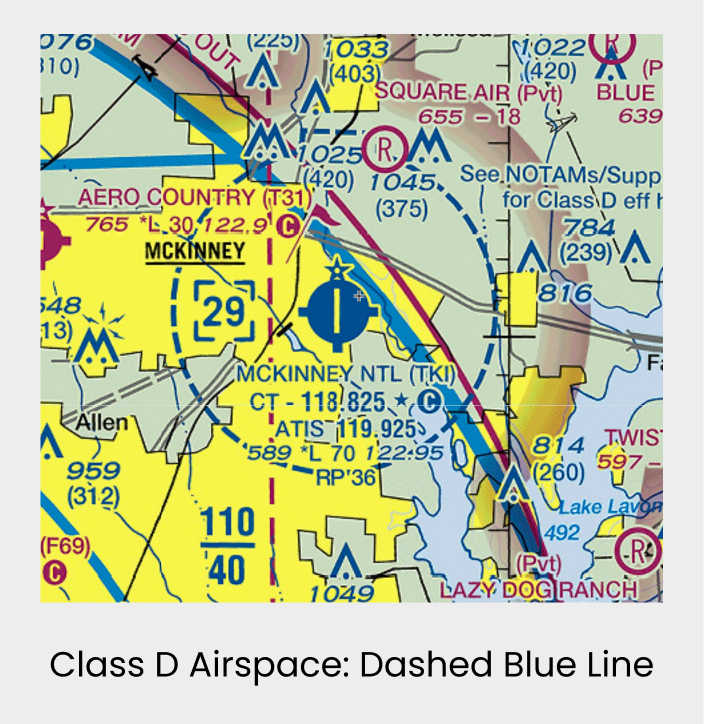
Class D on Sectional Charts
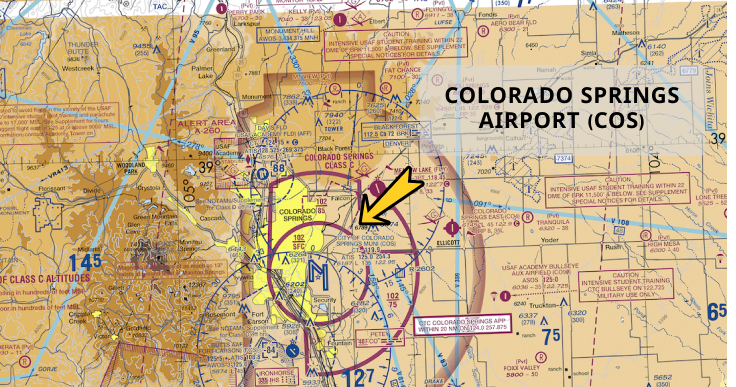
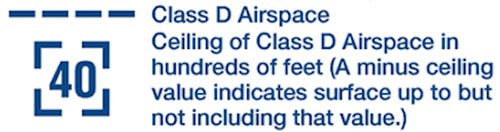
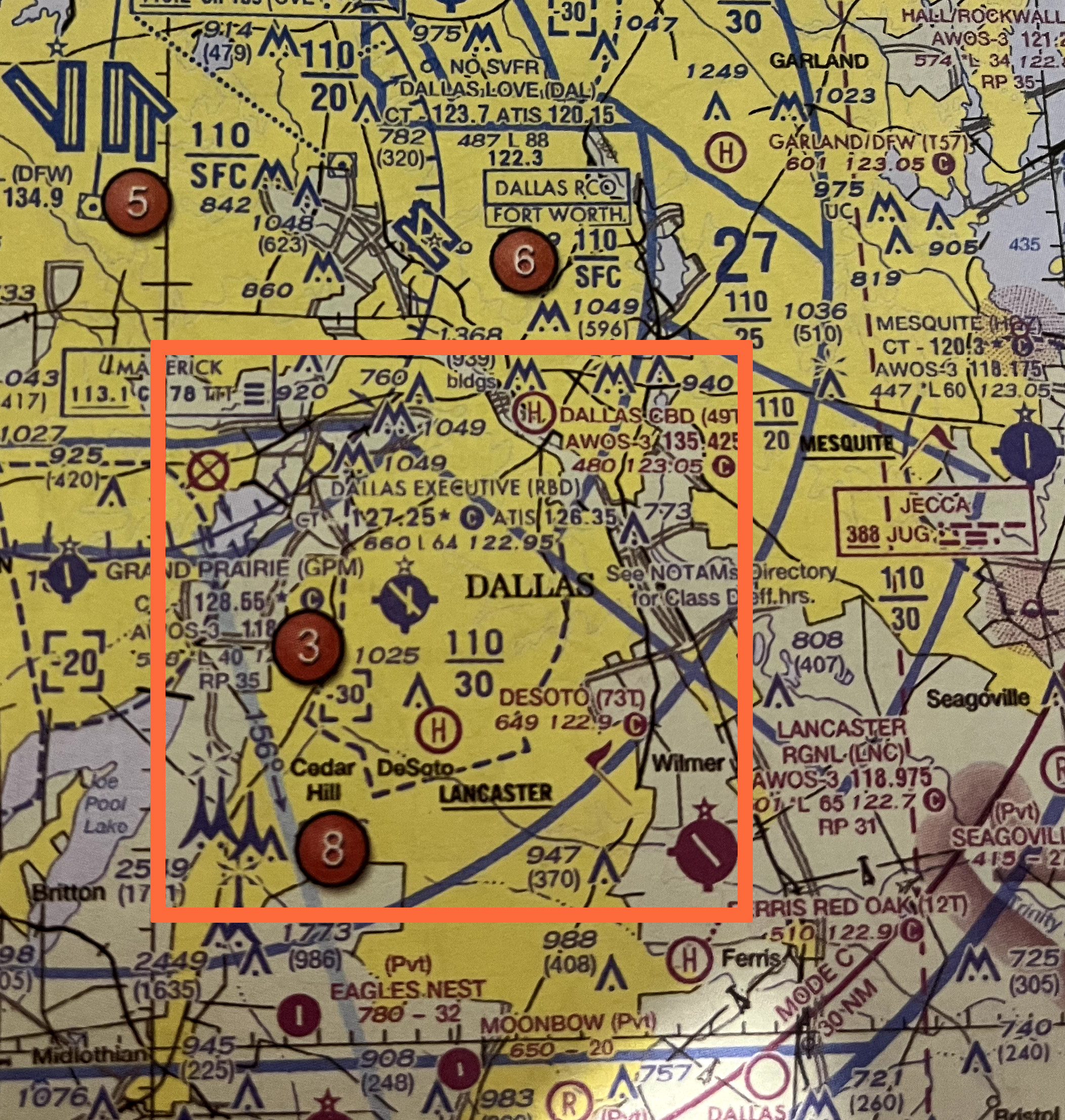
Class D airspace is depicted on sectional charts with a blue dashed line. It typically has a cylindrical shape around the airport, but the exact boundaries are tailored to the airport’s operational needs.
Class E on Sectional Charts
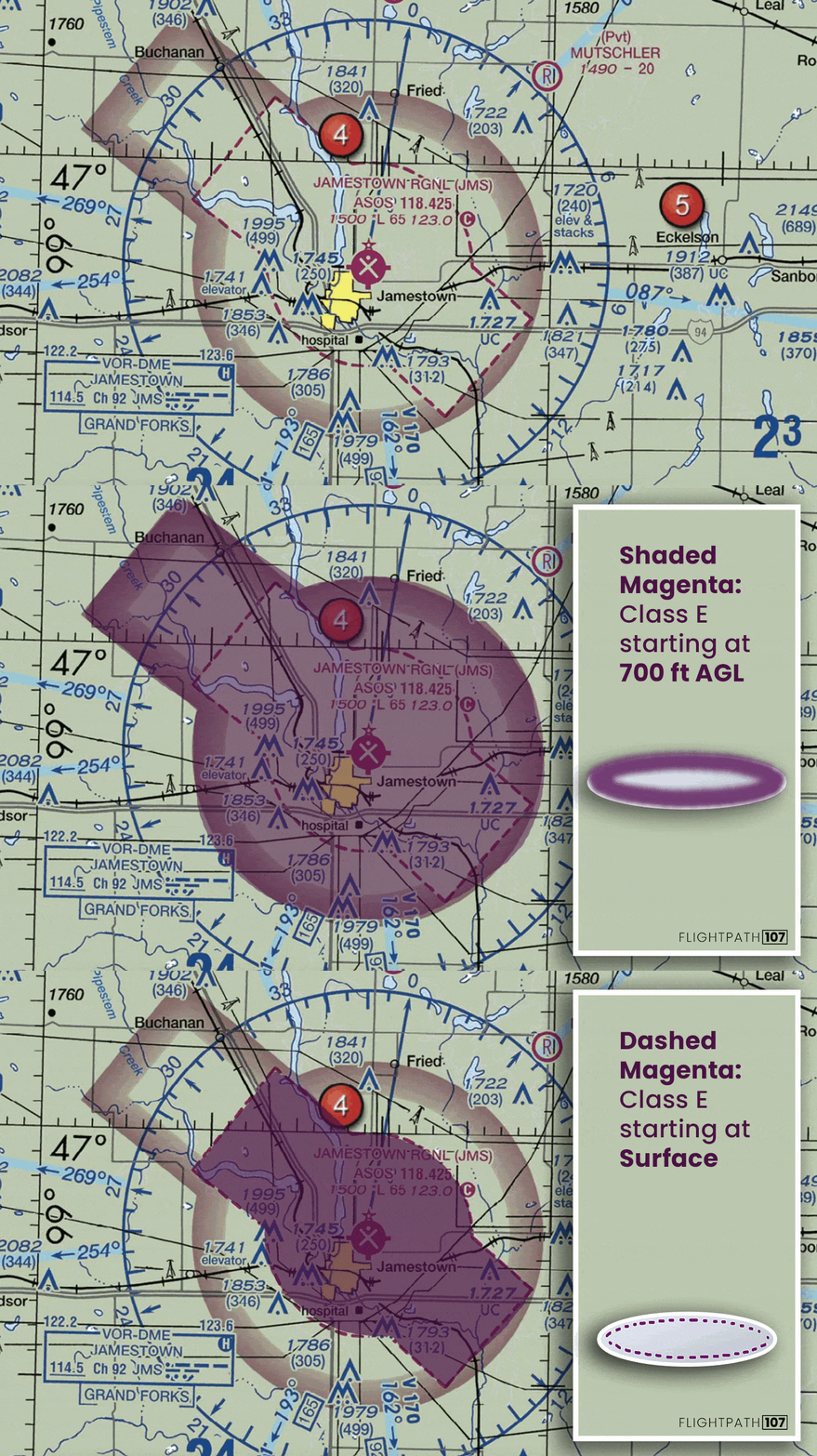
Below is Jamestown Regional Airport (JMS) is situated within two types of Class E airspace.
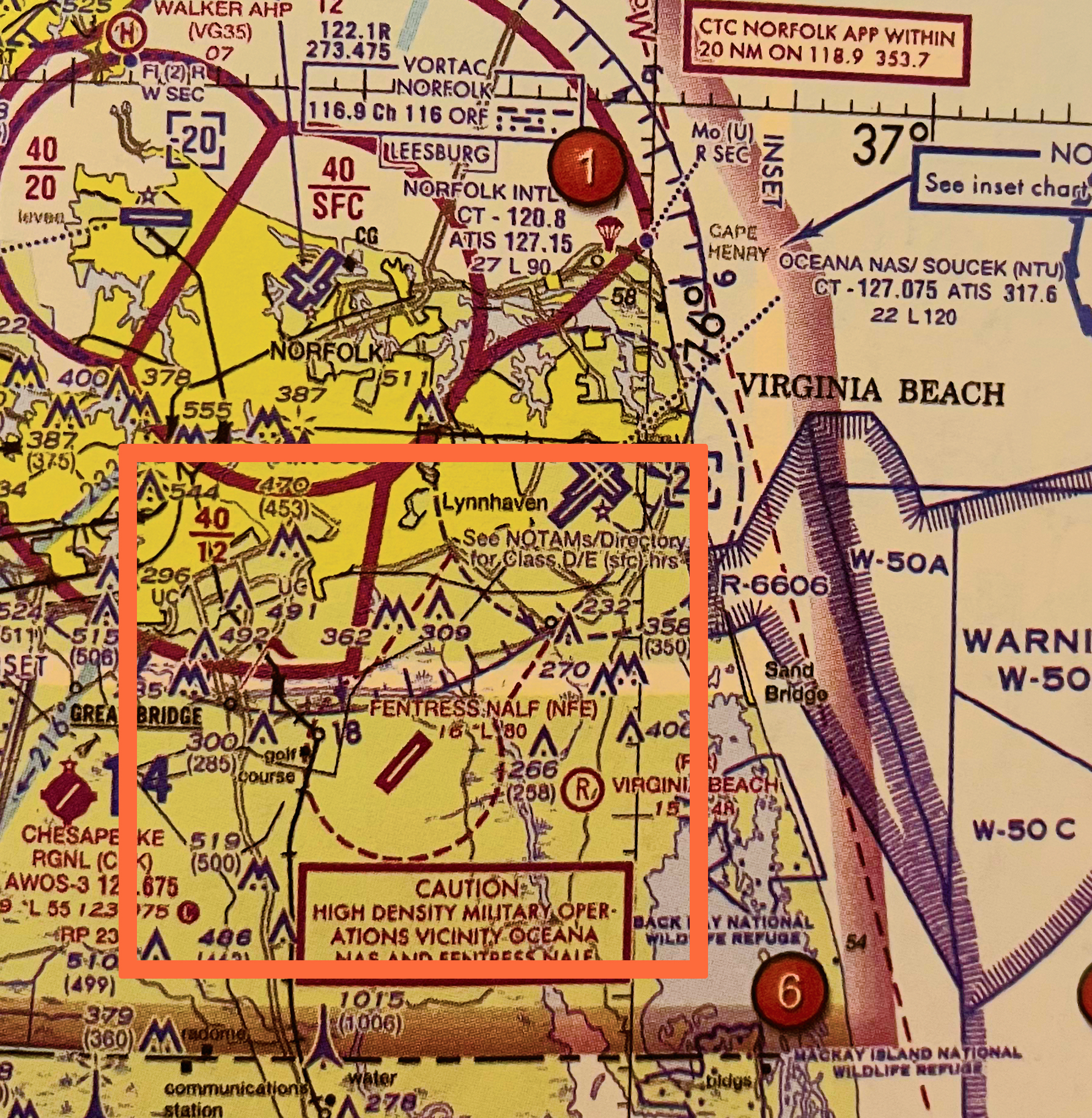
The area closest to the airport is marked by a dashed magenta line, indicating that Class E airspace starts at the surface and extends up to 700 feet AGL.
Farther out, the shaded magenta line marks where Class E airspace begins at 700 feet AGL.
CHANGE GIF ORDER SO THAT IT’S 1: PLAIN SECTIONAL CHART 2. STARTING AT SURFACE THEN 3. STARTING AT 700 AGL
Practice Quiz