Airport Flow of Manned Aircraft
Standard Landing Traffic Patterns
Fieldwork Foundations
To safely land at an airport, manned aircraft follow a standardized rectangular traffic pattern. This pattern allows pilots and air traffic controllers to predict aircraft movement, prevent collisions, and maintain orderly flow into the runway.
3 Legs of the Traffic Pattern
Weather Foundations
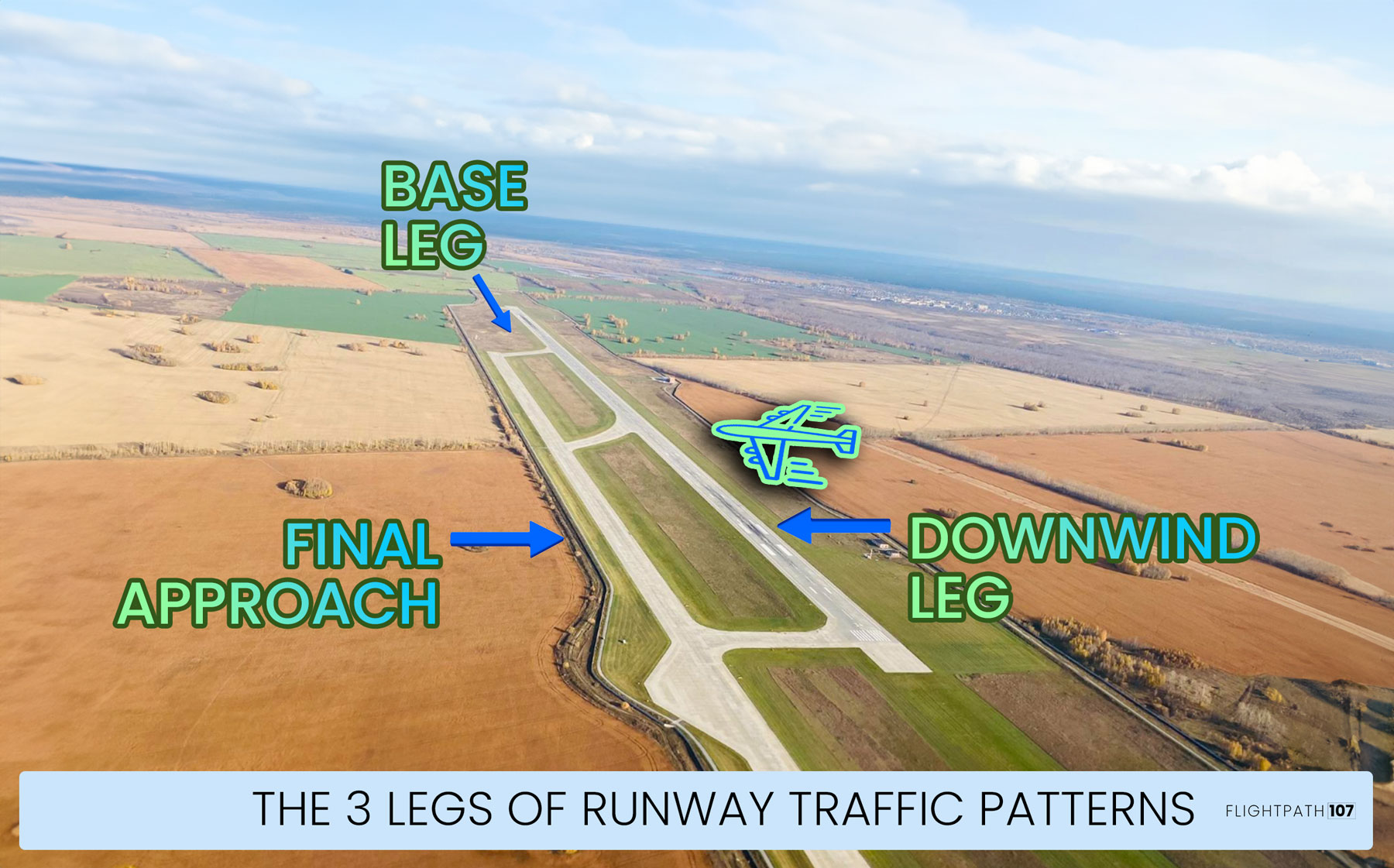
Navigating a traffic pattern has three main parts:
- Downwind Leg: Flying parallel to the runway, opposite the landing direction, to get ready for descent.
- Base Leg: A 90-degree turn that brings the aircraft closer to the runway and lines it up for the final approach.
- Final Approach: The last turn, pointing the aircraft straight at the runway for landing.
Understanding “Midfield Left Downwind” Calls – The Big Picture
Fieldwork Foundations
In any standard airport traffic pattern, an aircraft doesn’t fly straight into the runway from far away. Instead, it enters a pattern that loops it into position for a safe and controlled landing. Think of it like circling around to line up perfectly before pulling into a parking space—but at 100+ knots.
So when a pilot reports they’re on a “left downwind” for a specific runway (let’s say Runway 09), here’s what that means:
- They are parallel to the runway.
- They are flying in the opposite direction of the runway’s heading (i.e. opposite the direction they’ll land).
- The runway is on their left as they fly.
- And “midfield” just means they’re roughly halfway along the length of the runway.
So for any call like:
- “Midfield left downwind Runway [X]”
You can safely assume:
- The aircraft is flying opposite the direction of the runway’s heading.
- It still needs to make a series of left turns (base leg → final approach) to loop around and line up for landing on that runway.
- You can use the runway’s compass orientation to figure out what side of the airport they’re actually on.
This is exactly how you, as a drone pilot or visual observer, can picture where the aircraft is in space and avoid any potential conflict with your sUAS operation.
Up next, we’ll go through several examples so this becomes second nature.
3 Stages of Landing
Step 1: Entering the Pattern at a 45° Angle (Downwind Entry)
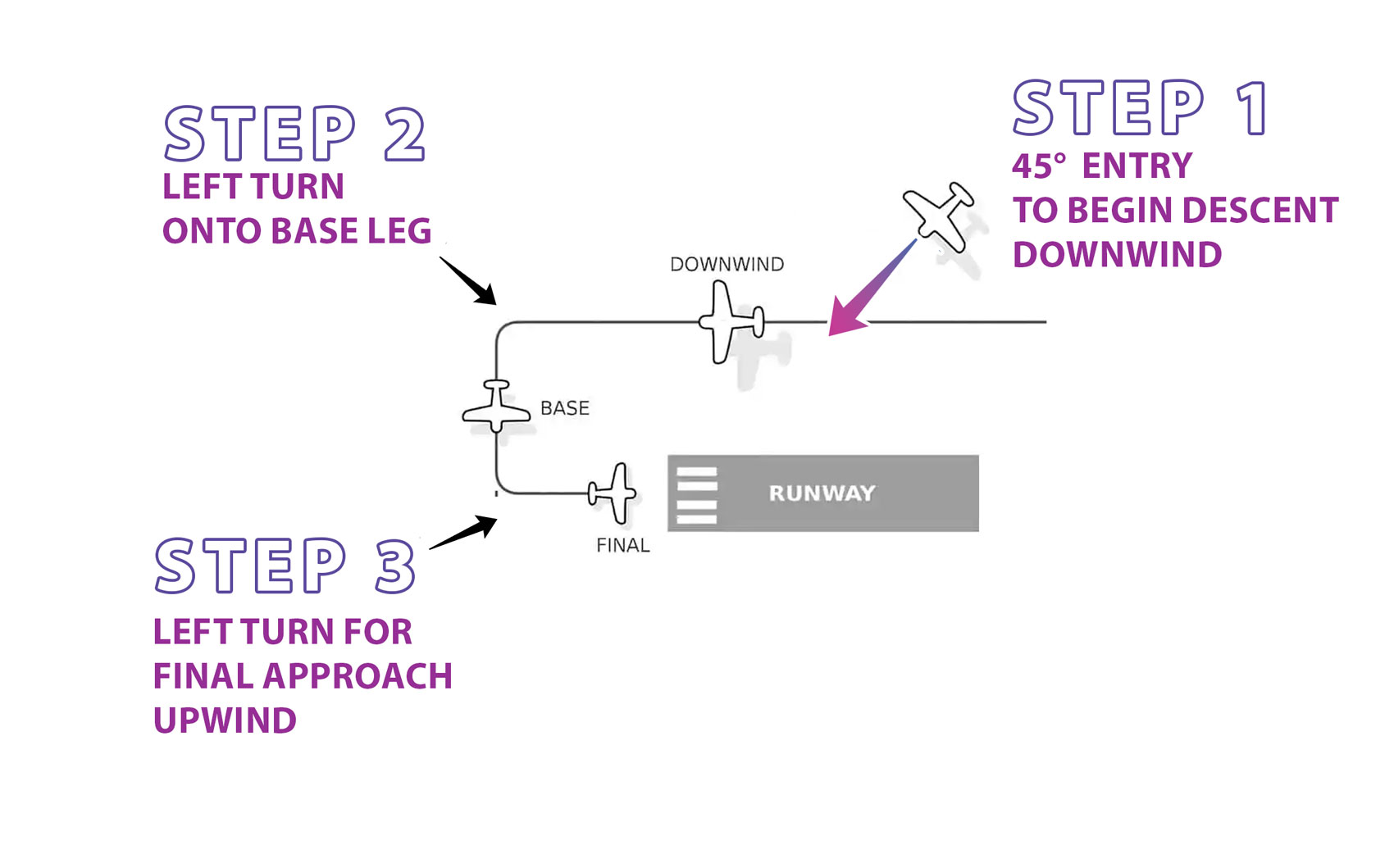
The standard way to enter the traffic pattern is by approaching the downwind leg at a 45-degree angle, aiming for the midpoint of the runway. This “midfield entry” helps the aircraft blend smoothly with others already in the pattern and gives the pilot clear visibility of traffic.
- Why the midpoint? It reduces the chance of cutting in front of aircraft already established in the pattern.
- Why 45 degrees? It offers a better visual scan for conflicting traffic than approaching head-on.
At this point, the aircraft is still airborne and beginning to integrate into the pattern alongside other inbound traffic.
Step 2: Turning Base and Final (Left-Hand Pattern)
Once established on the downwind leg (parallel to the runway, flying opposite the landing direction), the aircraft will begin a sequence of left-hand turns (in a standard pattern):
- First left turn: From downwind to base leg (a 90° turn).
- Second left turn: From base to final approach (another 90° turn).
These predictable turns guide the aircraft into alignment with the runway for landing. Most airports use left-hand patterns unless otherwise noted in the FAA’s Chart Supplement.
Step 3: Final Approach and Landing
On the final leg, the aircraft is lined up directly with the runway, descending into the headwind for landing. Flying upwind (against the wind) provides added lift and control, allowing for a smoother and safer touchdown.
For drone pilots: The final approach path is critical airspace. Aircraft are at low altitudes with little room to adjust. Avoid flying in or near this path.