Charting Earth’s Surface
> Part 2 of 4
Lines of Latitude and Longitude
Earth’s grid system for pinpointing any location
Mission: Grand Canyon Erosion Documentation Project
Field Notes 1: Pre-Flight Navigation
Chart orientation | True north vs magnetic north
You’re preparing for a documentation flight at Grand Canyon National Park as part of Aerial Atlas Coalition A new pilot is joining you for the first time, and you’re walking them through the pre-flight briefing.
You pull out your sectional chart and show them the flight corridor you’ll be staying within—it’s strict. The park doesn’t tolerate drones wandering into helicopter airspace.
“Okay,” the new pilot says, looking at their drone controller. “I’ll just follow this direction on my compass.”
You pause them.
“Wait—your compass shows magnetic north. The chart shows true north. They’re different.”
They look confused. You pull up the magnetic declination for Grand Canyon. Several degrees difference.
You explain: if they follow their compass without accounting for that difference, they’ll drift off the approved path. Over the distance of the flight, it’s enough to put them outside the corridor and into restricted airspace.
You show them how to adjust for it.
Here’s what you just learned: Your drone navigates using magnetic north. Your charts use true north.
In this Lesson You’ll Learn:
Latitude and longitude form a coordinate system that gives every point on Earth a unique “address.” By combining these two measurements, we can pinpoint exact locations—whether it’s a launch site, a waypoint, or an airport on your sectional chart.
Latitude, Longitude & Drone Flight
On FAA sectional charts, latitude and longitude are used to indicate the precise positions of designated landmarks, airports, runways, airspace boundaries, and waypoints.
How Drone Pilots Use Lat/Long in the Field:
- Identify waypoints: Find important landmarks or designated points using their coordinates
- Plot flight paths: Connect coordinates on the sectional chart to plan your route
- Navigate accurately: Follow your planned path using GPS coordinates
- Stay in regulations: Ensure you’re not entering restricted airspace by checking boundary coordinates
- Maintain precision: Hit exact locations for documentation or mapping missions
 Real Flight Planning Example:
- You’re planning a documentation flight along a scenic ridge. You mark your launch point at 39.5°N, 105.8°W, your first waypoint at 39.52°N, 105.78°W, and your landing zone at 39.54°N, 105.76°W. By plotting these coordinates on your sectional chart, you create a precise flight path that avoids restricted areas and keeps you on course.
True North vs Magnetic North
↔️
Latitude
run horizontally (east-west)
Latitude lines run horizontally (east-west) around the globe and measure distance north or south of the Equator.
The Equator is the starting point at 0° latitude—an imaginary line wrapping around the middle of the Earth, perfectly between the North and South Poles.
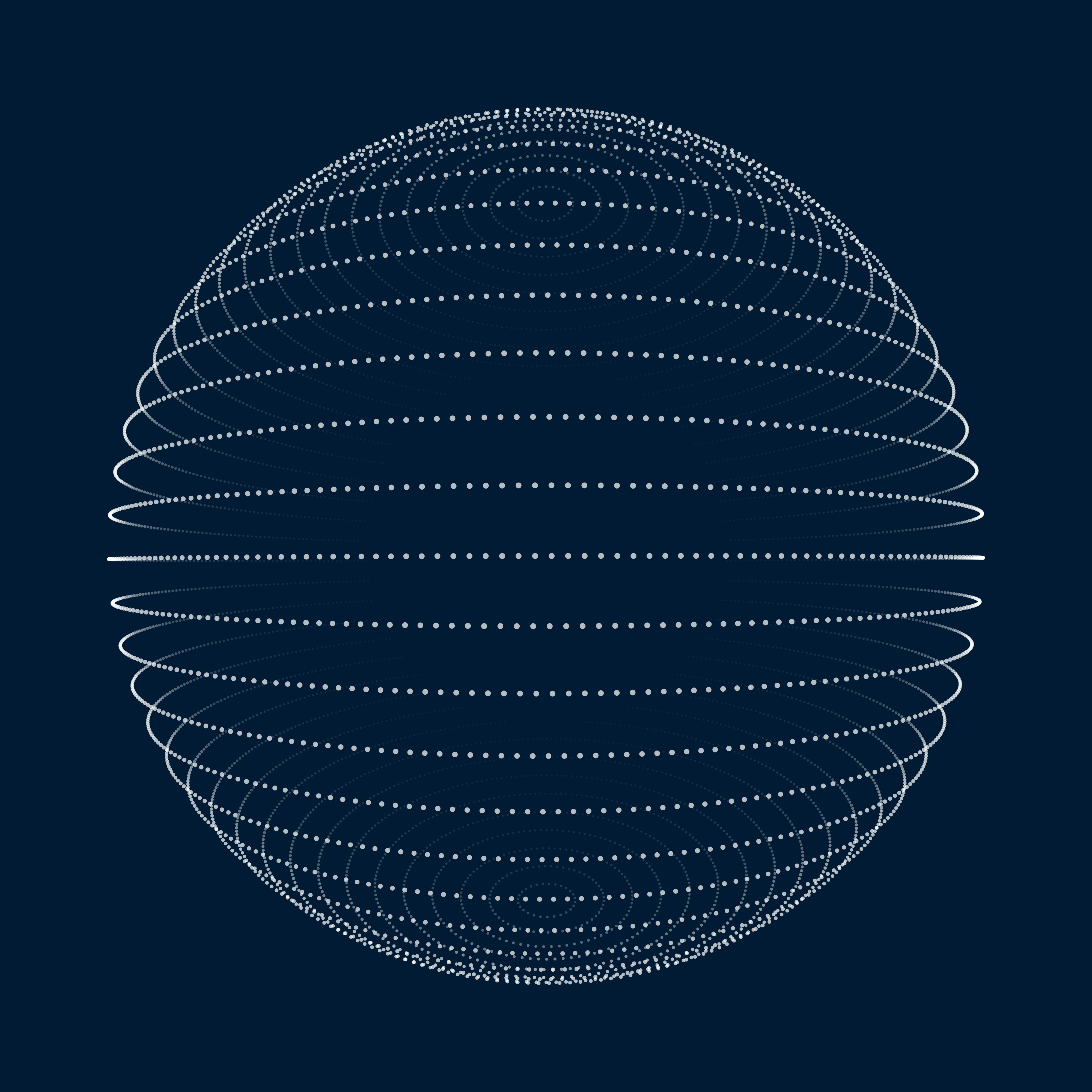
Latitude lines run parallel to the Equator
Key Facts About Latitude:
- Measured in degrees from 0° to 90°
- 0° = Equator (the middle of Earth)
- 90°N = North Pole
- 90°S = South Pole
- Lines run horizontally (east-west) but measure north-south distance
Example:
A location at 40°N is 40 degrees north of the Equator. The further you go from 0° (Equator) toward 90° (poles), the colder it gets.

Longitude
run vertically from the Pole to Pole
Longitude lines run vertically from the North Pole to the South Pole and measure distance east or west of the Prime Meridian.
The Prime Meridian is the starting point at 0° longitude—an imaginary line running from pole to pole, passing through Greenwich, England.
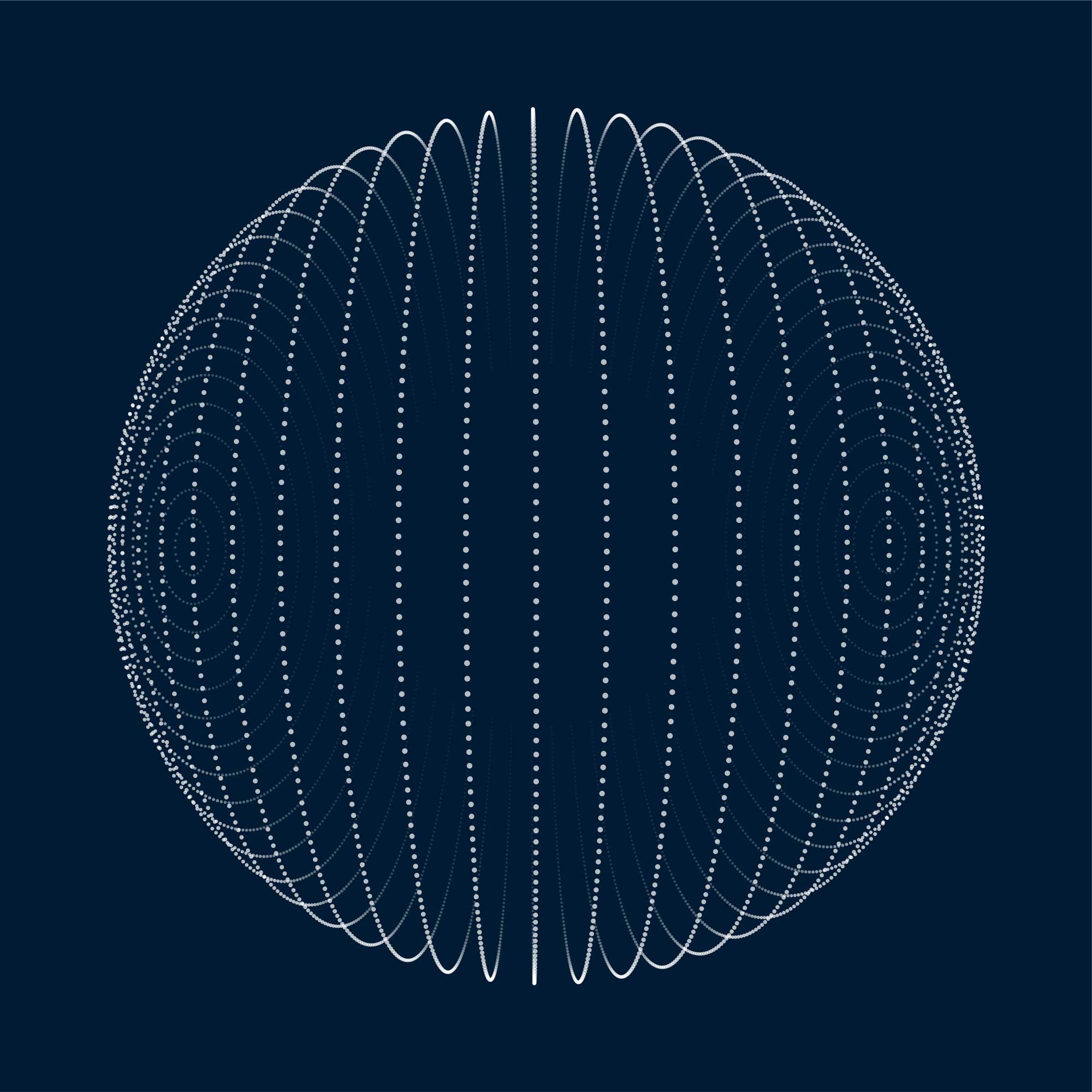
Longitude lines run from pole to pole
Key Facts About Longitude:
- Measured in degrees from 0° to 180° east and west
- 0° = Prime Meridian (runs through Greenwich, England)
- 180°E and 180°W meet on the opposite side of Earth
- Total range: 360° around the globe
- Lines run vertically (north-south) but measure east-west distance
Example:
The contiguous United States spans roughly 67°W to 125°W longitude.
The Equator & Prime Meridian
The cornerstone of latitude/longitude.
The Equator (0° Latitude)
The Equator is an imaginary line that wraps around the middle of the Earth at 0° latitude. It’s perfectly positioned between the North and South Poles and serves as the starting point for measuring how far north or south you are.
Locations north of the Equator have N (north) coordinates. Locations south have S (south) coordinates.
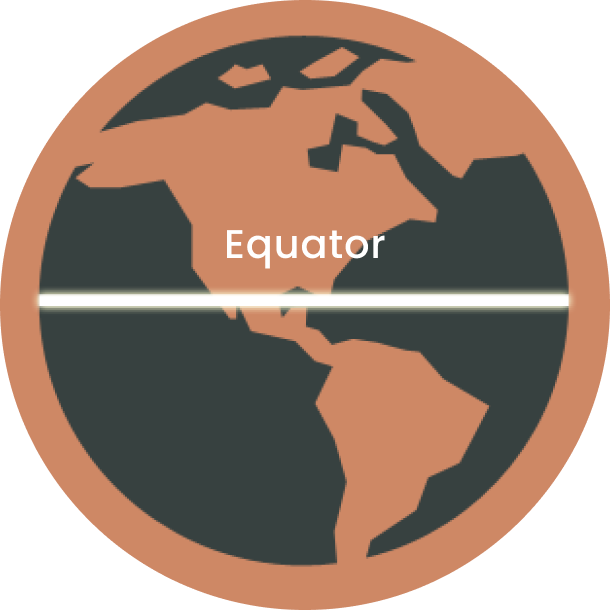
Equator
The Equator divides Earth into Northern and Southern hemispheres
The Prime Meridian (0° Longitude)
The Prime Meridian is an imaginary line running from the North Pole to the South Pole at 0° longitude. It passes through Greenwich, England, and serves as the starting point for measuring distances east and west.
The Prime Meridian runs roughly through Europe and Africa. Locations east of it have E (east) coordinates. Locations west (like the entire United States) have W (west) coordinates.
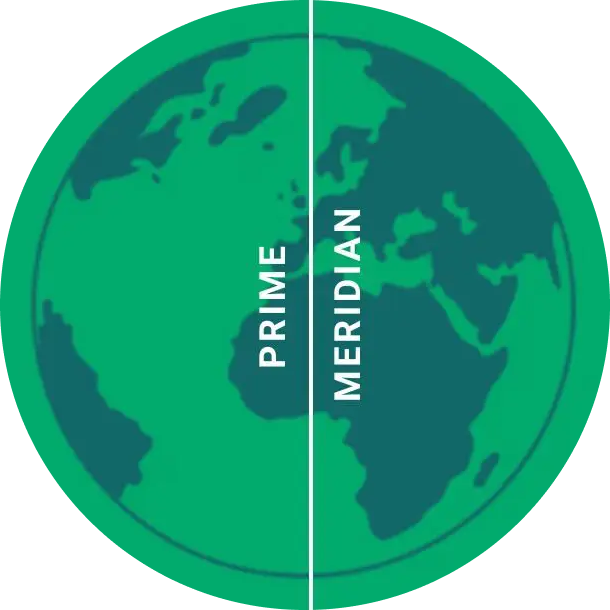
Prime Meridian
The Prime Meridian divides Earth into Eastern and Western hemispheres
How Latitude and Longitude Work Together
Every location on Earth can be identified by combining one latitude coordinate and one longitude coordinate. Together, they create a unique “address” on the globe.


Real-World Example:
The coordinates 40°N, 74°W will land you in New York City. The first number (40°N) tells you how far north of the Equator. The second number (74°W) tells you how far west of the Prime Meridian.
For drone pilots: On FAA sectional charts, latitude and longitude coordinates mark the positions of airports, runways, airspace boundaries, and landmarks. When planning a flight, you use these coordinates to identify waypoints, plot your path, and navigate accurately while staying within regulations.
Equator and Prime Meridian
The Equator and Prime Meridian divide Earth into four hemispheres:
- Northern Hemisphere: Everything north of the Equator (0° to 90°N)
-
Southern Hemisphere: Everything south of the Equator (0° to 90°S)
- Eastern Hemisphere: Everything east of the Prime Meridian (0° to 180°E)
- Western Hemisphere: Everything west of the Prime Meridian (0° to 180°W)
The United States is in the Northern and Western hemispheres—all locations have coordinates with N (north latitude) and W (west longitude).
Lesson Practice Exam
Take your time.
What’s Next?
In the following lessons, you’ll learn to interpret wind codes, visibility notation, weather phenomena abbreviations, and cloud coverage—step by step, on both METAR and TAF Reports.
By the end of this module, you’ll be able to look at any METAR or TAF report and know exactly what conditions to expect.